
Putting a Bow on it: The NAS Division Wraps Up the Year with SC21

This past November marked NASA’s 33rd consecutive year of participation in the International Conference for High-Performance Computing, Networking, Storage, and Analysis. Despite the limits of virtual participation due to ongoing concerns with the pandemic, our annual showcase of science and engineering breakthroughs and progress, enabled by our supercomputers and support services staff, shined through as brilliantly as ever!
To wrap up the NASA Advanced Supercomputing (NAS) Division’s valuable contributions to agency programs, here are 18 research projects led by NAS Division staff and featured at SC21—plus, some extra free goodies you can unwrap year-round!
Ready, Set, Launch!
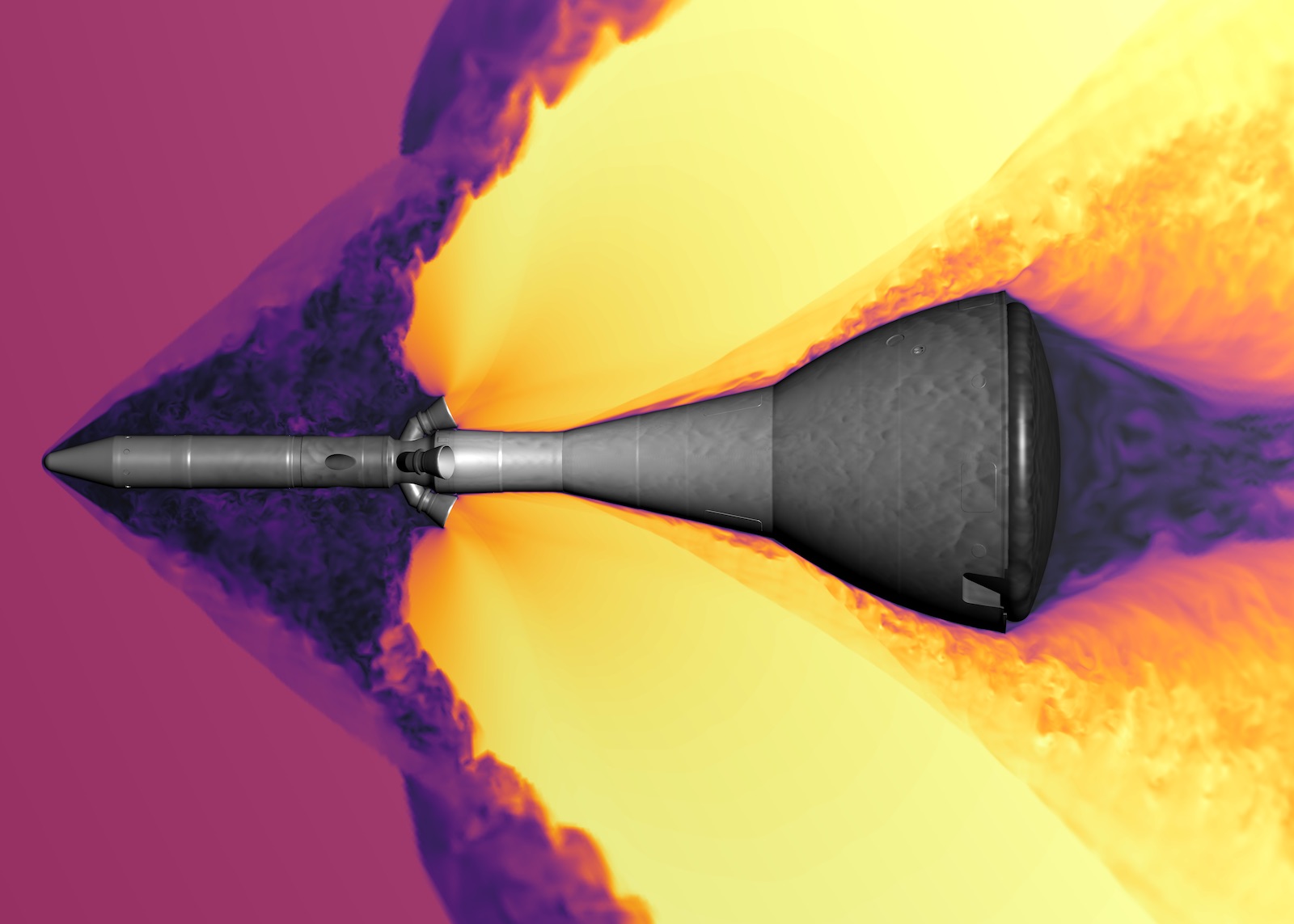
The first Artemis launch is set for 2022! To help NASA get ready for the exciting missions that will soon return humans to the Moon, NAS Division researchers are working hard to supply detailed simulation-based analyses for the Space Launch System, Orion spacecraft, and KSC launch environment.
Simulating the Launch Environment at NASA’s Kennedy Space Flight Center
The LAVA team’s new multiphase simulations will give a more complete picture of the extreme conditions of the KSC launch environment and help reduce mission risk.
Flight Readiness Simulations for Artemis
As part of the Artemis Program, NAS’s CFD researchers are using our supercomputing resources to analyze and certify the aerodynamics of the Space Launch System that will lift astronauts into orbit.
Predicting Orion Ascent Abort Acoustic Environment to Enhance Astronaut Safety
NAS researchers produced unprecedented simulations of Orion crew module launch abort scenarios, including those for high-altitude, near-hypersonic abort—helping to reduce risk and ensure the safety of astronauts when using the LAS.
From Earth to Infinity and Beyond!
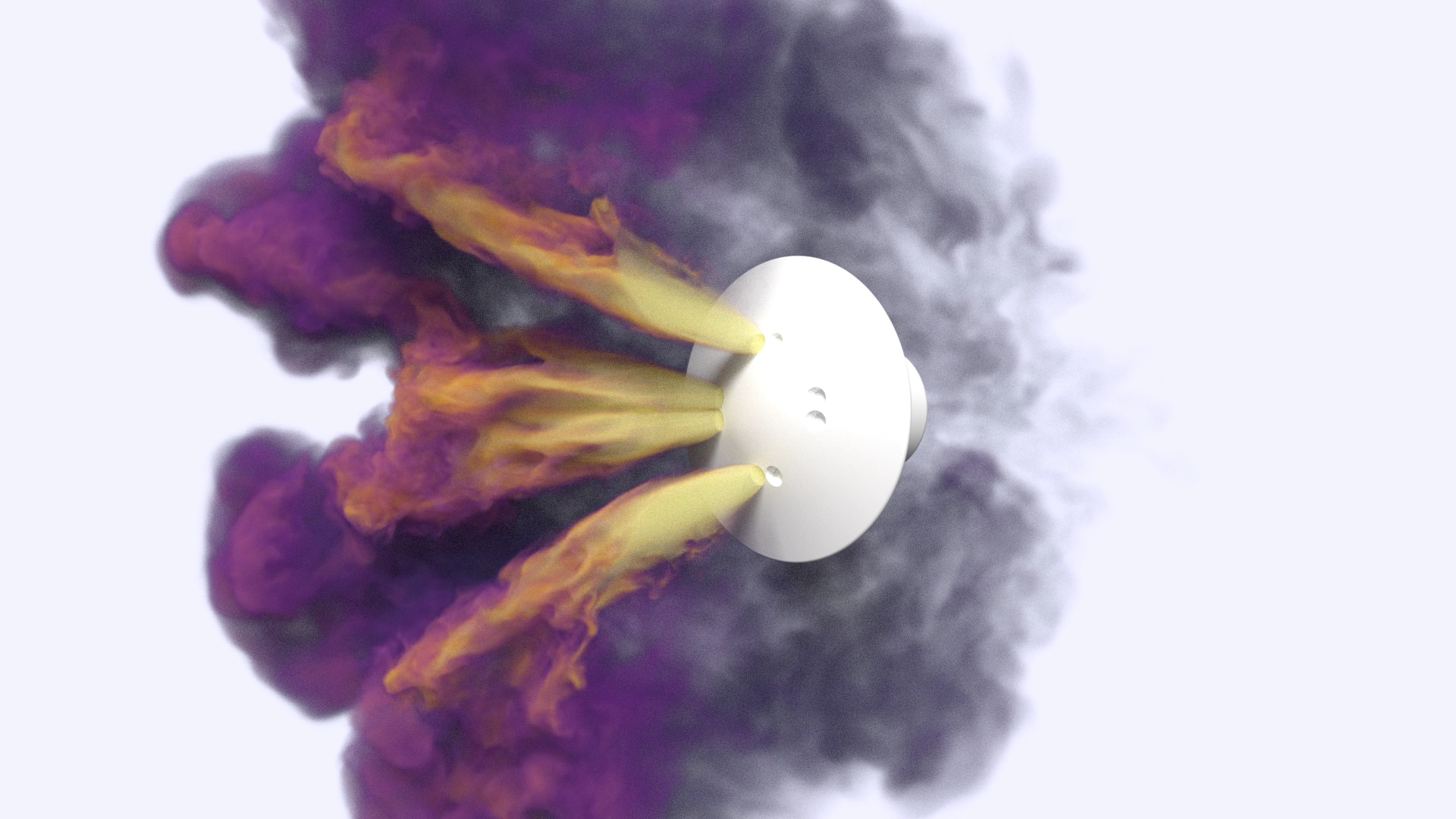
NAS researchers are on it—whether it’s creating tools to process and share the latest Earth science data, or figuring out how the Sun operates and affects both our planet and missions in space, or helping to plan for smooth landings on Mars.
Preparing to Map the World in Living Color with the Surface Biology and Geology Mission
In 2027, NASA will launch the Surface Biology and Geology (SBG) mission to map the Earth in unprecedented detail. Our researchers generated a full year of synthetic SBG data that is available to the science community on theNAS Data Portal.
3D Radiative Hydrodynamics Model to Capture the Effects of Solar Rotation
Our heliophysics team produced a 3D model of the Sun’s magnetic activity that reveals new information on solar rotation and improves the ability to detect regions that are most dangerous to Earth due to their impacts on space weather.
Simulating Supersonic Parachute Inflation for Mars Landing
Robotic missions to Mars all begin with a capsule entering the Martian atmosphere and deploying a large parachute to slow down for landing. To help engineers analyze parachute designs, the LAVA team simulated flight tests with parachutes inflating in supersonic conditions.
Simulating a Mars Supersonic Retropropulsion Concept Vehicle
The LAVA team also conducted simulations of a concept vehicle for Mars entry, descent, and landing using supersonic retropropulsion technology—demonstrating that accurate CFD predictions can be produced in short-enough turnaround time for possible use in engineering design decisions.
Visualizing the Flow Physics of Human-Scale Mars Entry
Looking far ahead, our visualization and analysis experts developed and applied methods for understanding the complex flow field phenomena associated with reacting-gas retropropulsion for future human-scale Mars landers.
Air Taxis, Green Aircraft, and Sonic Booms—Oh My!
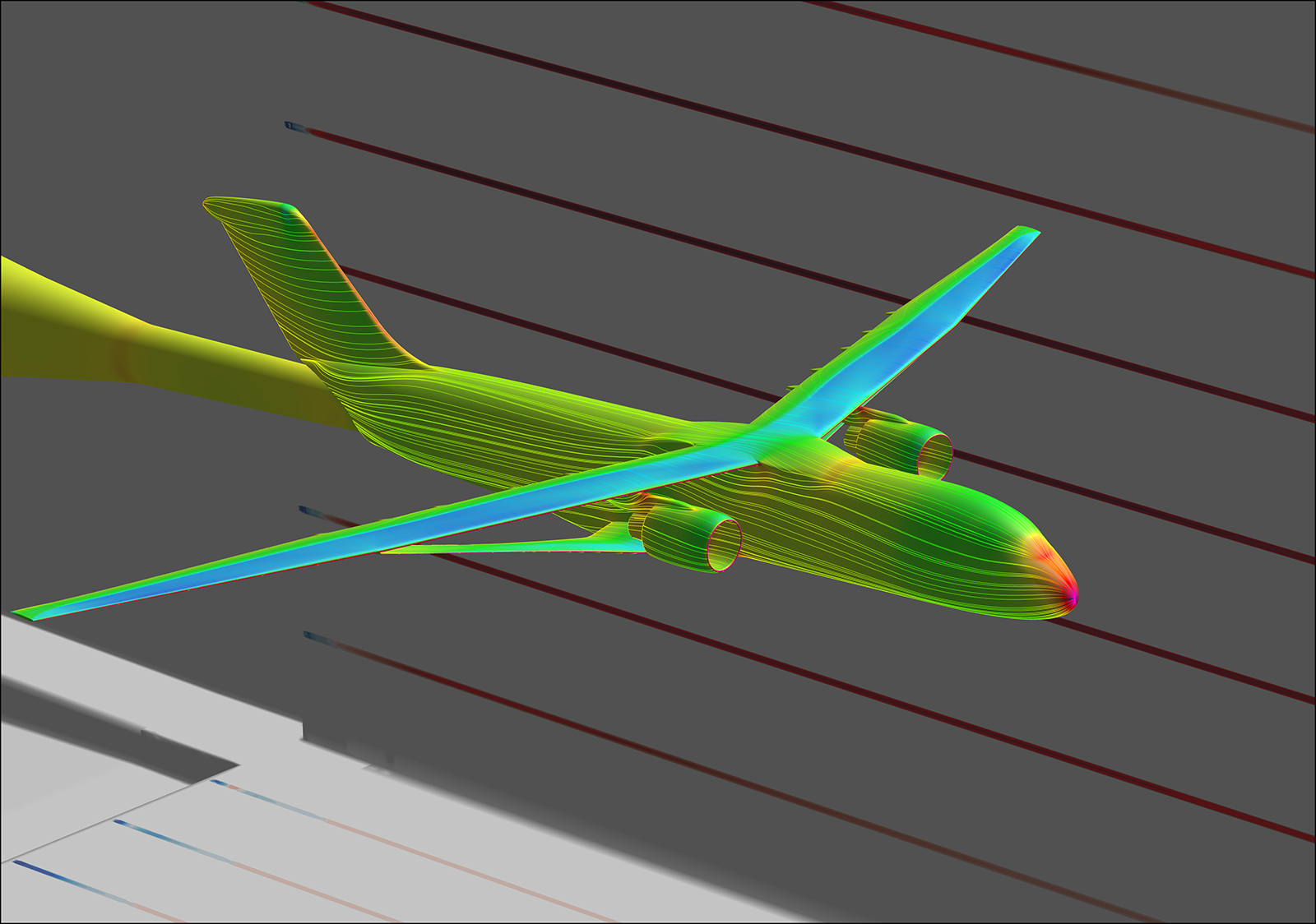
Many of the NAS Division’s aeronautics projects that were highlighted for SC21 focus on NASA’s goals to help develop quieter, more fuel-efficient aircraft.
Active Controls for a Smooth Ride on Air Taxis in Urban Environments
NAS-developed techniques and simulations are being used to help industry partners design advanced concept air mobility vehicles, such as air taxis.
Simulations of the Complex Multirotor Test Bed Experiment
Our researchers used high-fidelity computational fluid dynamics (CFD) to validate and analyze NASA’s Multirotor Test Bed system to facilitate wind tunnel testing for multirotor aircraft configurations.
CFD Analysis of Integrated Propulsion Systems for the SUSAN Aircraft
NAS researchers supported the development of the SUbsonic Single Aft eNgine (SUSAN) aircraft, an innovative turbo-electric transport concept, designed to help address environmental issues faced by the aviation industry.
Turbulence Resolving Simulations for Aircraft Certification by Analysis
Using our in-house Launch Ascent and Vehicle Aerodynamics (LAVA) software, NAS researchers performed scale-resolving simulations to help reduce the high cost of wind tunnel and flight tests for aircraft designs.
Predicting Jet Noise for NASA’s Low Boom Flight Demonstrator
The LAVA team’s high-fidelity, scale-resolving simulations are helping engineers better understand jet noise and evaluate technologies to reduce sonic boom noise.
Preparing the X-59 Quiet Supersonic Transport Aircraft for Flight
NAS researchers also used our LAVA and Cart3D software to build a database of thousands of high-fidelity CFD simulations that will be used as the basis for developing the the Quiet Supersonic Transport (QueSST), an advanced low-boom aircraft concept.
Increasing Aircraft Fuel Efficiency with Boundary-Layer-Ingesting Tail-Cone Thrusters
Working with colleagues at NASA’s Glenn and Langley Research Centers, the LAVA team ran high-fidelity CFD simulations that are key to analyzing boundary layer ingestion, with a goal to reduce impacts on the environment.
CFD Analysis of the Transonic Truss-Braced Wing Aircraft
NAS researchers simulated the Mach 0.8 configuration of the Boeing Transonic Truss-Braced Wing concept, which has the potential to improve fuel efficiency of commercial aircraft.
Active Flow Control for Enhancing High-Lift Wing Performance
As part of multi-year study to help improve aircraft efficiency, NAS researchers, with cohorts at the University of California, Davis, ran time-accurate simulations of surface-normal pneumatic circulation control AFC—also known as microjets.
On the technical front, to prepare for supporting the agency’s future science and engineering efforts and pave the path to exascale computing, the High-End Computing Capabilities (HECC) project is changing to meet NASA’s challenges. This year, HECC installed new nodes at our Modular Supercomputing Facility—representing the largest single supercomputer expansion at any NASA site. Among the project’s many achievements this year, our data science experts created a framework to allow researchers to do neural network training at scale with deep learning tools.
From all of us at NAS, we wish you a safe, warm holiday season and a very Happy New Year. See you in 2022!
—Jill Dunbar and Michelle Moyer, NASA Ames Research Center
See all of NASA’s science and engineering demonstrations presented at SC21 by visiting: http://www.nas.nasa.gov/SC21/
