
COVID Researchers Complete Projects Using Supercomputers at NAS
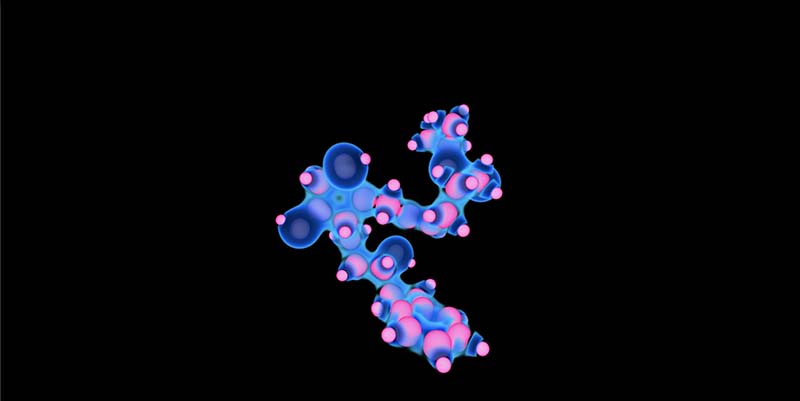
Using computing resources at the NAS facility, COVID-19 scientists from around the U.S. conducted rapid research in the fight to understand the SARS-CoV-2 virus and develop treatments and vaccines to help bring an end to the pandemic.
Three research projects were recently completed using donated supercomputing time and services, and results have been shared via publications and presentations.
- Researchers at Massachusetts Institute of Technology and Harvard University analyzed the predictive performance of their machine learning (ML) model predictions in their project, “Drug-repurposing for COVID-19 with 3D-aware Machine Learning.” The models produced from this work accurately screen unknown compounds for SARS-CoV-2 inhibition. Results are in a publicly available dataset and a code repository.
- A team led by investigators at NASA’s Ames Research Center processed RNA-sequencing data, “Gene Hub Analysis to Identify Host Response to COVID-19.” Researchers successfully analyzed 845 COVID-19 patient samples and environmental swab data to improve understanding of SARS-CoV-2 interaction with hosts.
- A joint project between Virginia Commonwealth University and the University of Minnesota, “SARS-CoV-2 Spike Protein: Unlocking the Pick That Picks Our Cells,” helped uncover dynamic and structural changes in spike protein variants that may lead to increased transmission rates.
These projects were supported as part of NASA’s participation in the White House Office of Science and Technology Policy’s COVID-19 HPC Consortium, a unique private-public effort led by the White House Office of Science and Technology Policy to contribute free HPC resources to approved proposals.
NAS Division Chief Piyush Mehrotra spearheaded NASA’s involvement, and participated in Consortium tasks to assess proposals for technical feasibility and benefits, then match approved proposals to resource providers based on the specification and HPC requirements. Mehrotra managed an internal review to select proposals matching NASA’s interest and available resources and ensured that project teams had all the support required for their successful completion.
