
The Gift that Keeps on Giving: NAS Division Research in 2022

These selected projects led by NAS Division experts over the past year will benefit agency missions and projects for years to come! All were presented during SC22, the International Conference for High-Performance Computing, Networking, Storage, and Analysis, where NASA returned in person this year to showcase the science and engineering made possible by the agency’s supercomputers.
To the Moon and Beyond
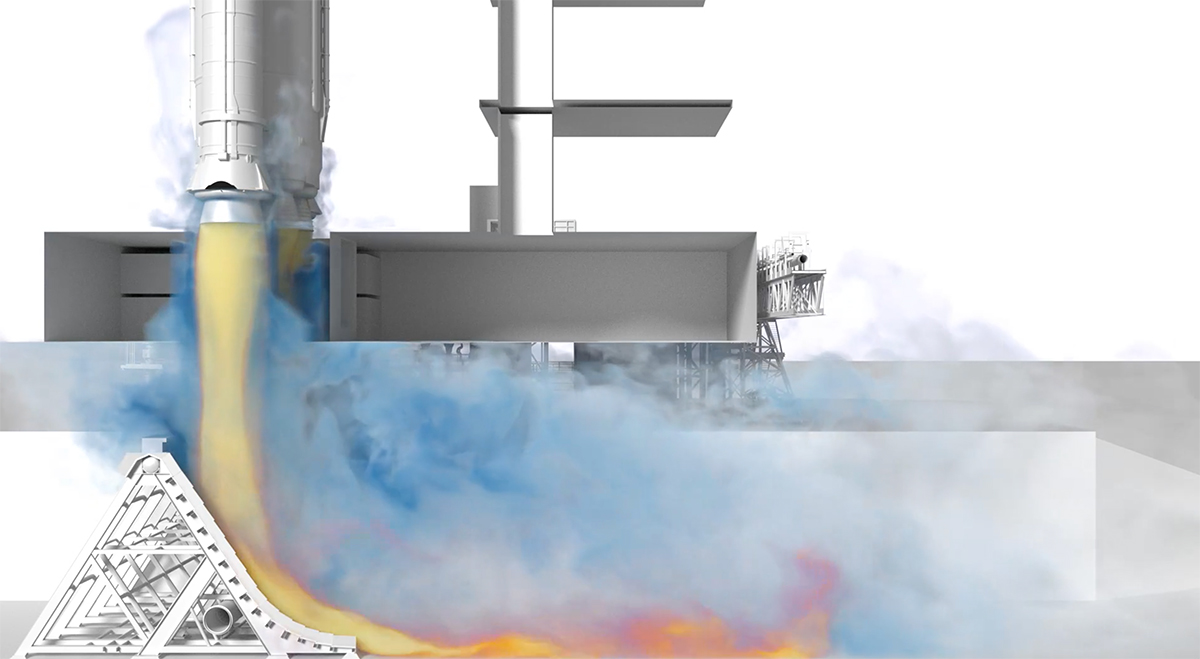
Space is the place, and supercomputers are helping to take us there! The first mission of the Artemis Program was a dramatic success, thanks in part to NAS researchers.
Multiphase Simulations of the Launch Environment at NASA’s Kennedy Space Center
NAS computational fluid dynamics experts have been working with teams across the agency to predict how exhaust from rockets generates shock waves around the launch structure.
Building Aerodynamic Databases for NASA’s Space Launch System
In support of NASA’s Artemis missions, researchers at NAS have been developing a massive aerodynamic database to help ensure that the solid rocket boosters separate safely from the Space Launch System.
Simulating Supersonic Parachute Inflation for Mars Landers
Engineers at NASA Ames are developing the capability to simulate many scenarios of supersonic parachute inflation in order to reduce risk and cost of one of the riskiest aspects of entry, descent, and landing (EDL) on Mars.
Investigation of Solar Torsonial Oscillations and their Relation to Activity Cycles
Scientists are working to understand how the Sun’s magnetic fields are generated and how jet streams called “torsional oscillations” in the solar interior relate to the 11-year sunspot cycles.
The Future of Aviation
New aircraft ideas wing their way from concept to reality with a stopover in the simulation zone—located inside NAS supercomputers.
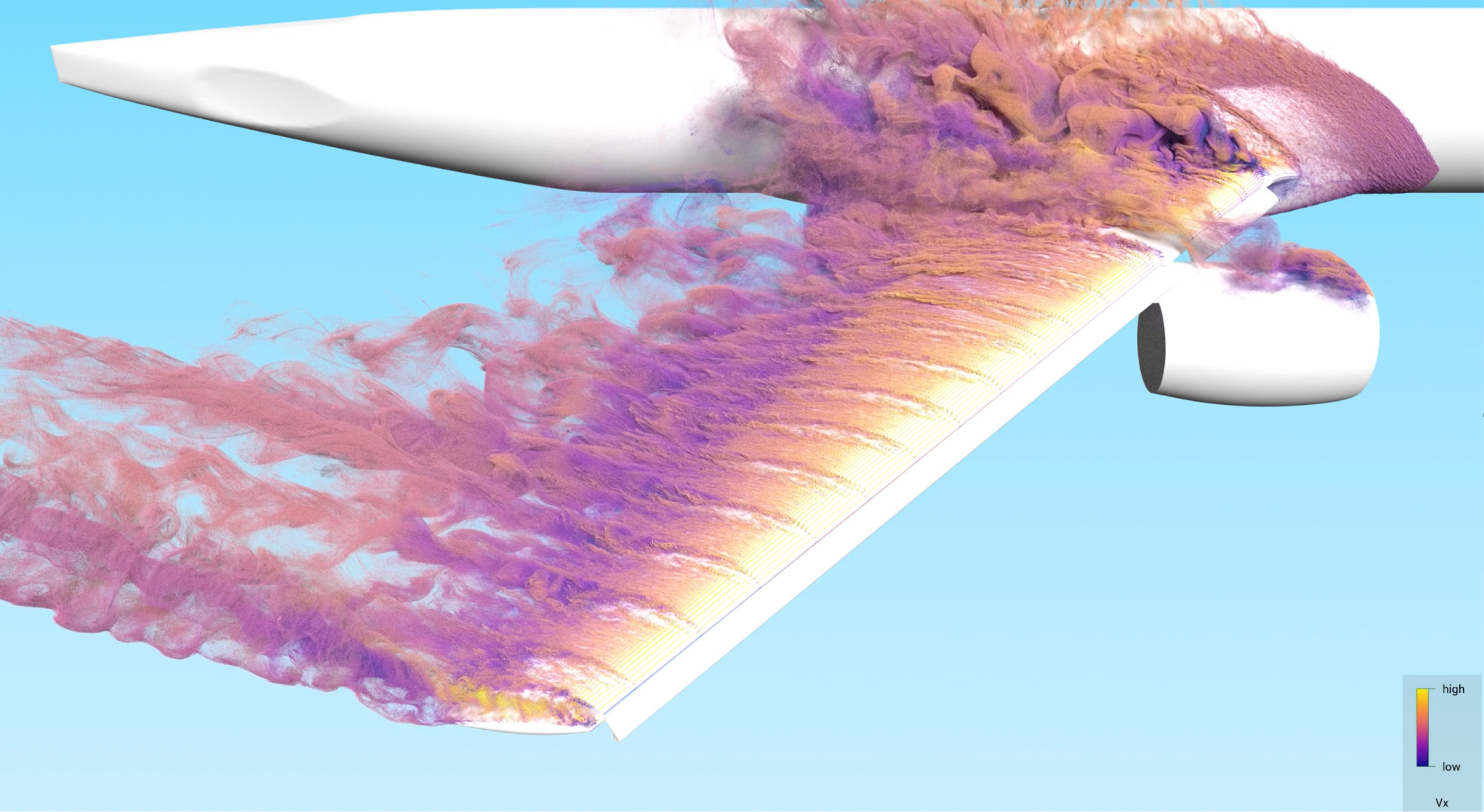
Computational Analysis for Design of NASA’s Side-By-Side Concept Vehicle
NAS Division aerospace engineers are simulating a new air taxi concept vehicle to capture its complex rotor blade aerodynamics, rotor performance, and rotor-rotor interaction.
Wall-Modelled Large Eddy Simulations for Aircraft Certification-by-Analysis
Researchers from NAS are developing and validating in-house tools to enable analysis-based design certification for high-lift (takeoff and landing) aircraft configurations.
NASA’s SUSAN Electrofan Aircraft: Designing the Future of Green Aviation
Researchers at NASA Ames and other centers teamed up to study the design and performance of the SUSAN Electrofan aircraft—the Subsonic Single Aft eNgine—an innovative concept that aims to reduce energy use and emissions.
Scale Resolving Jet Noise Simulations to Reduce Airport Noise
To assess environmental noise impact against the economic benefits for commercial supersonic aircraft, NASA Division scientists built a large database to successfully predict jet and jet-surface interaction noise and reduce simulation time from weeks to hours.
Predicting Buffet Onset on the Transonic Truss-Braced Wing
To support scale-model wind tunnel tests of the TTBW aircraft concept, researchers at NAS are using computational fluid dynamics to predict performance and better understand experimental results.
A Decade of Discovery in Rotorcraft Simulation with NASA Supercomputing
Over the last decade, NASA supercomputers have been used to improve prediction of rotorcraft hover performance 10-fold, enabling more accurate simulations to help design safer, greener, and quieter rotorcraft.
Simulations for Designing Safe and Efficient Air Taxis
To help understand the complex flows around various concept aircraft that will transport passengers and cargo in urban and suburban areas vehicles, NAS aero experts simulated air taxi vehicles using our Aitken and Pleiades supercomputers.
Advancing NASA Software for Sonic Boom Prediction
NAS computational fluid dynamics experts are using the in-house developed Cart3D and LAVA solvers to help the agency’s Quesst mission design a flight planning tool for overland supersonic flight.
On the Technical Side
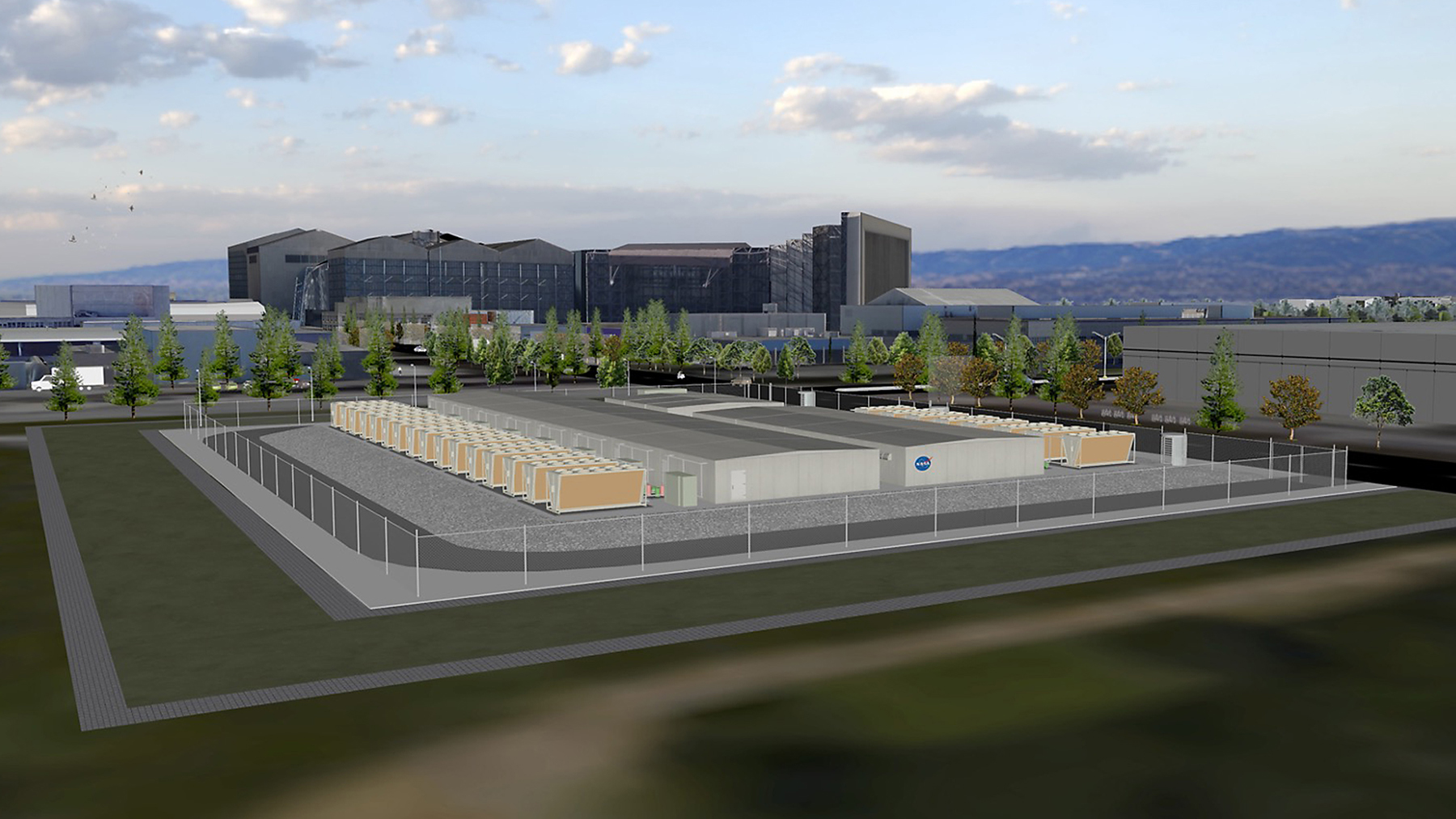
NAS systems and services experts have been busy! In 2022 we improved access to our cloud resources, sped up data science processes such as synthetic data generation, and expanded NASA’s newest supercomputer—twice!
HECC: Evolving to Meet Tomorrow’s Requirements
This year, Aitken—housed in our energy-efficient Modular Supercomputing Facility—was expanded with hundreds of new nodes, becoming NASA’s most powerful supercomputer!
Powering Synthetic Data Generation with HPC and Dask
Working with the NAS Data Science team, biospheric scientists at Ames were able to leverage agency supercomputers and parallel processing to eliminate a bottleneck in their production pipeline.
From all of us in the NAS Division, we wish you a safe, warm holiday season and a Happy New Year. See you in 2023!
—Jill Dunbar and Michelle Moyer, and Katie Pitta, NASA Ames Research Center
See all of NASA’s science and engineering demonstrations presented at SC22 by visiting: http://www.nas.nasa.gov/SC22/
