
Stars & Planets – Kepler Lives On: It's All in the Data
Over the past four years, NASA's Kepler mission has wowed scientists and space enthusiasts with the discovery of new planetary systems once thought to be the stuff of science fiction. Now that the spacecraft no longer has the pointing precision needed to search for Earth-like planets, a team of scientists at NASA Ames Research Center has transferred the entire Kepler Data Processing Pipeline to NASA's Pleiades supercomputer to continue the mission's work.
With this data-centric focus, we are expecting more exciting discoveries as the Kepler team continues to tease out the faint transit signals of smaller planets.
Todd Klaus, Kepler scientist at NASA Ames Research Center
This transfer enables sophisticated and computationally expensive processes—data calibration, photometric analysis, pre-search data conditioning, transiting planet search, subsequent data validation, and searches for multiple planets—to be completed in a just a few days. Use of Pleiades, coupled with improved pipeline software, enables scientists to get a more accurate understanding of the percentage of stars that have potentially habitable Earth-sized planets.
Quick Facts
- As of November 2013, the Kepler team has found 3,538 planet candidates orbiting 2,165 host stars with 167 confirmed planets—an increase of 20% over the previous year.
- The largest population increases are in Earth-sized and super Earth-sized planet candidates, with over 1,700 planetary candidates close to the size of Earth.
- One in five stars in the population has a planet up to twice the size of Earth and orbiting within its star's habitable zone.
- Four new planet candidates have been found, each less than twice the size of Earth and orbiting within the habitable zone—with one orbiting a Sun-like star.
- 43% of planet candidates are in multiple planet systems.
Key Image
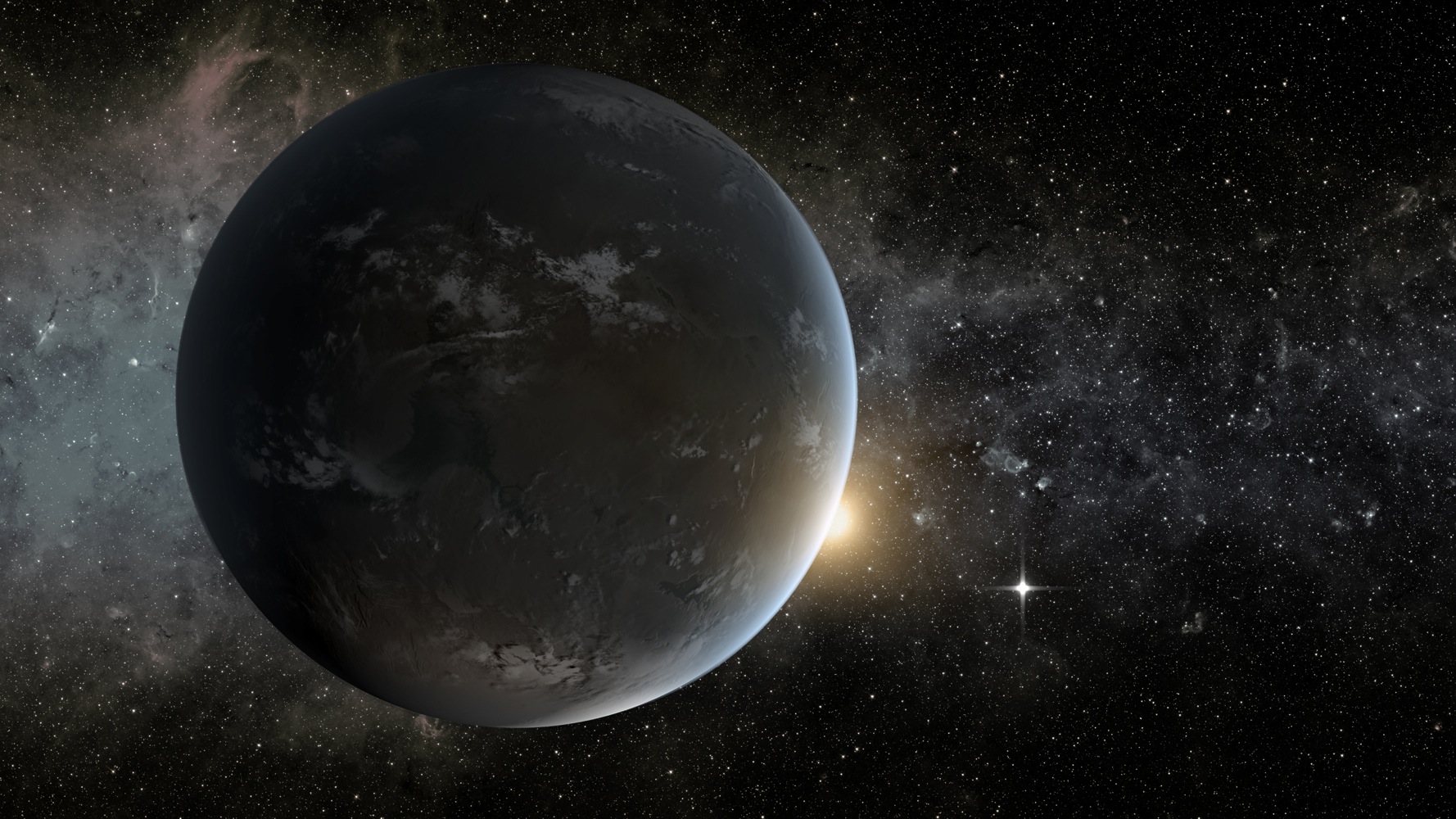
Image Caption
This artist's concept depicts planet Kepler-62f, a super-Earth-sized planet in the habitable zone of its star, which is seen peeking out from behind the right edge of the planet. The small shining object farther to the right is Kepler-62e, which orbits on the inner edge of the star's habitable zone, and is roughly 60 percent larger than Earth. NASADownload High-Res Image
Contacts
Todd Klaus, NASA Ames Research Centertodd.c.klaus@nasa.gov Shawn E. Seader, NASA Ames Research Center
shawn.seader@nasa.gov