Aerodynamic Analysis to Support Safe Human Spaceflight
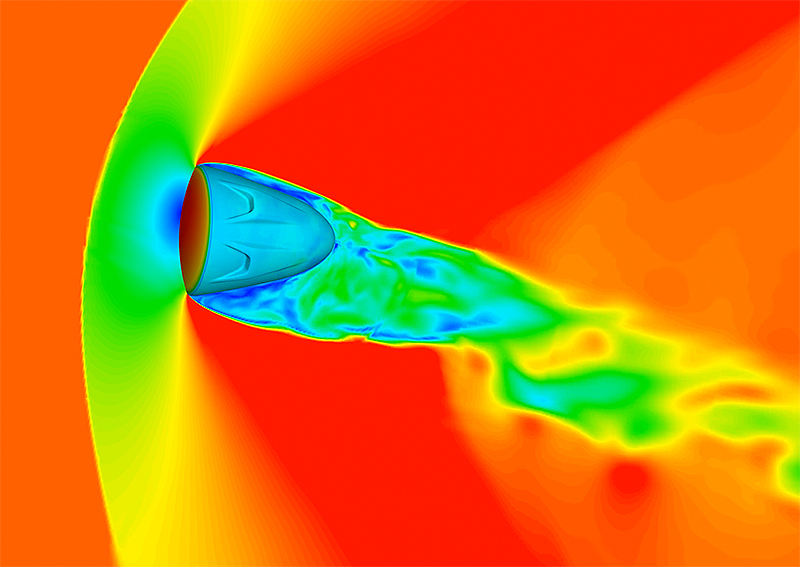
Aerospace engineers in the Applied Aeroscience and Computational Fluid Dynamics (CFD) branch at NASA’s Johnson Space Center have been working on a number of programs supporting human-rated spacecraft. Using NASA high-end computing resources, they have performed CFD analyses to support the Commercial Crew Program’s SpaceX Dragon—which is routinely used to fly astronauts to the International Space Station—and the Boeing Starliner, which is being prepared for its first crewed flight to and from the ISS. In addition, they ran CFD solutions of the Orion spacecraft and the Space Launch System, in support of the agency’s Artemis program to return to the Moon and eventually establish a human presence on Mars. The team’s CFD simulations are used to create aerodynamic databases, or verify existing databases, which are then used by program leaders and engineers to evaluate the flight characteristics of these spacecraft and are even rolled up into trajectory simulations that verify these vehicles are safe for our astronauts to fly in.
Quick Facts
Spacecraft abort systems are designed to provide astronauts the ability to safely escape from a failing launch vehicle. Certifying these systems requires a huge analysis space from pre-launch until reaching orbit. NASA supercomputing resources allow us to thoroughly analyze the abort system performance over the entire design space, resulting in a higher level of success and reliability than would otherwise be possible, and safer vehicles for our astronauts.
- These simulations are part of NASA’s efforts to certify three separate human-rated spacecraft currently in use by the agency: the SpaceX Dragon, the Boeing Starliner, and the Orion spacecraft.
- While the SpaceX Dragon has reached operational status, Orion and Starliner have completed several uncrewed flight tests and will fly their first crewed missions in the coming year. The agency’s policy for human-rating requirements is designed to protect the health and safety of humans involved in or exposed to space activities, specifically the public, crew, passengers, and ground personnel.
- The team at NASA Johnson uses their Europa supercomputer as well as the computing resources available at the NASA Advanced Supercomputing (NAS) facility at Ames Research Center to run thousands of CFD solutions to show that these vehicles will meet their mission objectives.
Researchers
- Darby Vicker, NASA Johnson Space Center Please enable Javascript to see email address.
- Jim Greathouse, NASA Johnson Space Center Please enable Javascript to see email address.
