Porting the Goddard Earth Observing System Model to GPUs: A Pragmatic Approach
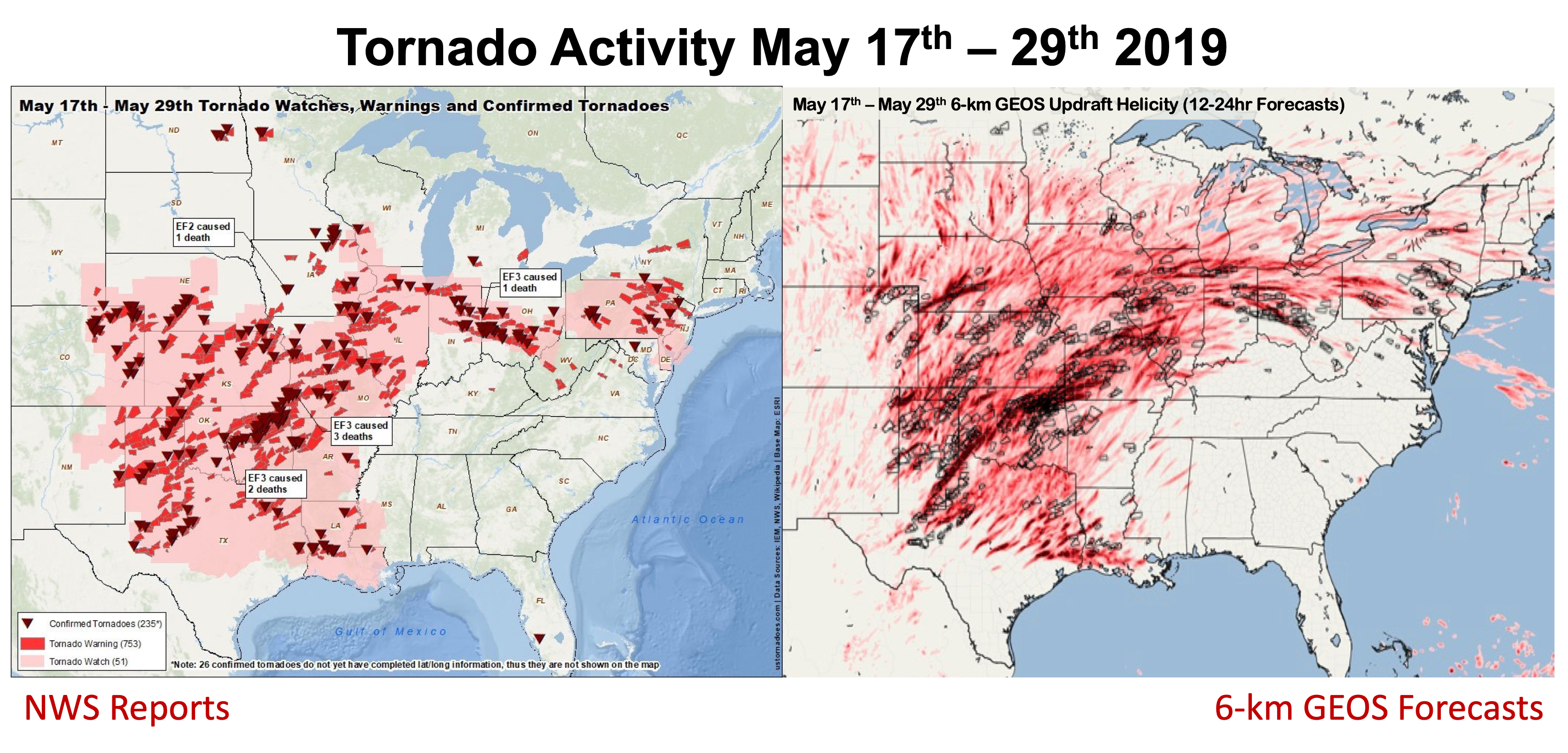
NASA is aiming to leverage GPU-accelerated high-performance computing (HPC) for the Goddard Earth Observing System (GEOS) model, as accelerator-based HPC systems provide a promising platform to meet future GEOS requirements. GEOS connects a group of model components in a flexible manner to address different aspects of Earth science. The size and ongoing development of the model demand an iterative approach implementing a CPU/GPU hybrid codebase to accelerate it and help meet near-future science needs. NASA Goddard Flight Center’s Advanced Software Technology Group presents here the first results of this iterative strategy. The team ported the GEOS atmospheric dynamical core using a Python-based domain-specific language (DSL) along with the atmospheric moist physics component using the OpenACC parallel programming standard. Validation and benchmarking for an “Aquaplanet” configuration of GEOS show the viability of this iterative approach and lay a pragmatic path towards GEOS acceleration.
Quick Facts
We have successfully developed a strategy that ports an entire section of the GEOS model onto GPUs in order to start yielding acceleration to scientists now while we continue working to accelerate the rest of the GEOS code.
- The team developed and tested the GEOS DSL and OpenACC GPU-port on the NASA Center for Climate Simulation’s Discover supercomputer and the National Energy Research Scientific Computing Center’s Perlmutter supercomputer.
- The speed-up demonstrated at various points in the GEOS code shows not only that GPUs substantially accelerate the ported code but also can significantly speed up the entire application, even if most of the code remains on CPUs.
- This work shows that the GPU porting strategy can be deployed iteratively on GEOS, which means reaching production on GPUs can happen before porting substantial parts of the code.
- The team will keep porting code and reviewing updates to the underlying technology to bring even more GPU performance to GEOS.
Researchers
- Florian Deconinck, NASA Goddard Space Flight Center Please enable Javascript to see email address.
- Christopher Kung, NASA Goddard Space Flight Center Please enable Javascript to see email address.
