Toward Energy Efficient High-End Computing
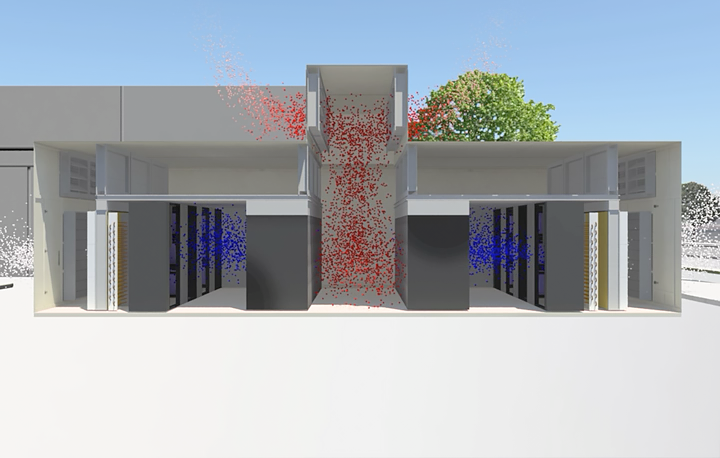
NASA’s High-End Computing Capability (HECC) component provides a suite of powerful leading-edge tools to meet the agency's challenging mission to explore space and to understand our planet and its place within the universe. NASA’s ability to maintain its premiere position in science and engineering, and to provide the nation with optimal solutions to our complex problems, will be heavily impacted by how we can exploit and drive emerging technologies in hardware and software—such as physics-based simulations, data analytics, machine learning, and tools—that will increase the effectiveness of our scientists and engineers. For nearly 20 years, HECC has accomplished these goals while minimizing use of power and water, including evolving from air-cooled systems to warm-water systems and analyzing and optimizing operations to make sure users are making the most productive use of the systems. HECC’s efficient Modular Supercomputing Facility (MSF) at NASA’s Ames Research Center—which houses the Aitken and Electra supercomputers—uses cooling systems that take advantage of the temperate San Francisco Bay Area climate, resulting in over 90% savings in electricity and over 95% savings in water used for cooling. In addition, HECC is currently making plans to upgrade the chiller plant that cools the agency’s Pleiades supercomputer, which will reduce the chillers’ use of electricity by 50%.
Quick Facts
It is imperative that NASA high-end computing managers look for ways to constantly improve the efficiency of their facilities and systems to maximize science and engineering results while minimizing the impacts on our environment. Focusing on all stages of the discovery process can lead to large reductions of environmental impacts while improving performance.
- HECC software engineers have optimized the way many users’ codes access the systems, resulting in a 70X improvement in power usage (measured in watts/job) in some cases.
- The HECC project continues to strive toward a more sustainable high-end computing environment, with a focus on moving toward reducing the power needed to run computing jobs while maintaining system performance.
- HECC’s next goals are to develop meaningful metrics that can help further minimize the impact of high-end computing on the environment; analyze power sources with the aim of reducing their carbon footprint; and improve the power usage effectiveness (PUE) ratio of the existing supercomputing facilities at NASA Ames.
Researcher
- William Thigpen, NASA Ames Research Center Please enable Javascript to see email address.
