
Lighting the Fire: High Fidelity Combustion Modeling for Deep-Space Exploration
Overview
NASA’s human space flight program goals are rapidly progressing toward deep-space exploration. In concert, NASA Marshall Space Flight Center (MSFC) has been tasked with developing propulsion systems capable of transporting astronauts beyond Earth’s orbit. Engines fueled by liquid oxygen (LOX) and methane (CH4) have been selected as the leading chemical-based propellant system for in-space propulsion.
Reliable ignition of an in-space propulsion system is essential for mission success and the safety of astronauts on board. The critical elements of ignition extend beyond the chemical reactions in the combustion chamber. MSFC’s LOCI/Chem and Loci-STREAM suite of computational fluid dynamics (CFD) software has been used to analyze various propellant mixing and ignition scenarios to support the development of LOX/CH4 in-space propulsion systems. Beyond propellant mixing, time-accurate CFD modeling of ignition and combustion can present significant technical and resource challenges.
Methane offers several advantages over fuels traditionally used by NASA for in-space propulsion. Methane is denser than hydrogen (H2), has more energy per volume than H2 and other hydrocarbons, is less corrosive than hydrazine, and can be manufactured from carbon dioxide. However, methane ignition presents unique and difficult challenges and poses a significant risk for in-space ignition. Ignition of hydrocarbon fuels is complex, and stable combustion has been historically difficult for engine design. For example, the Aerojet Rocketdyne RL10—the first liquid hydrogen rocket engine to be built in the U.S.—presented significant ignition challenges at altitude. Significant resources are required for an empirically-based engine development program like the RL10. A comprehensive, analysis-based approach can leverage state-of-the-art technical and methodology innovations made in the decades following the original RL-10 development to provide a cost-effective, physics-based design approach that marries with a modern-era, leaner testing approach.
Project Details
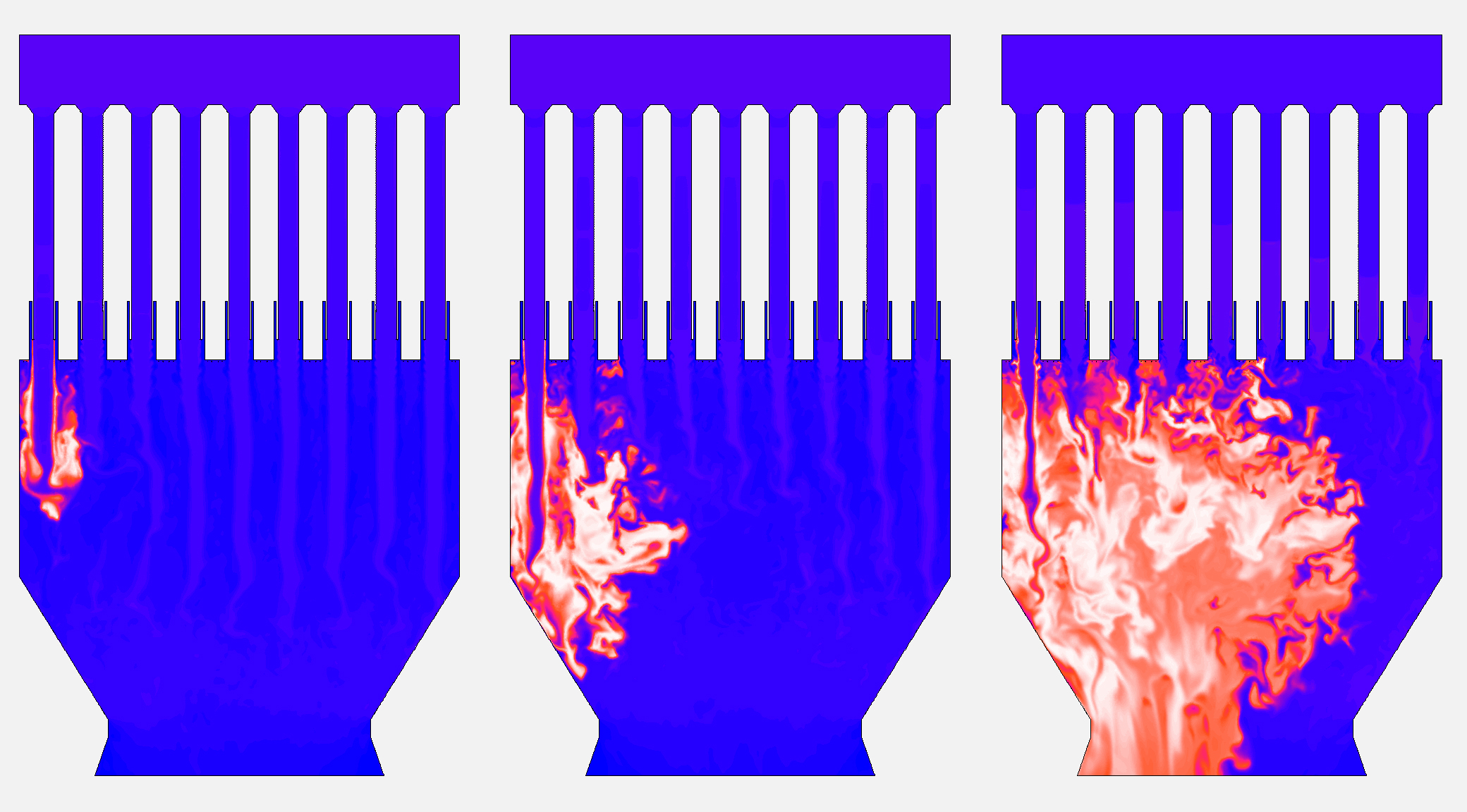
As part of this project, we were able to model the complex physics of methane ignition and better understand how to ignite NASA’s future deep-space engines. We demonstrated the capability to model the time-accurate ignition process of oxygen and methane for a complex geometry. Contrary to the misconception that this type of analysis is too slow to support a practical engineering problem, we were able to achieve rapid turnaround time for these models. This capability is critical for using the analysis to guide the design of an engine. Through multiple simulations we developed the experience to identify how and where ignition will occur in a rocket combustion chamber. Furthermore, we were able to validate the results of the CFD with experimental observations, providing confidence in our modeling approach.
Why HPC Matters
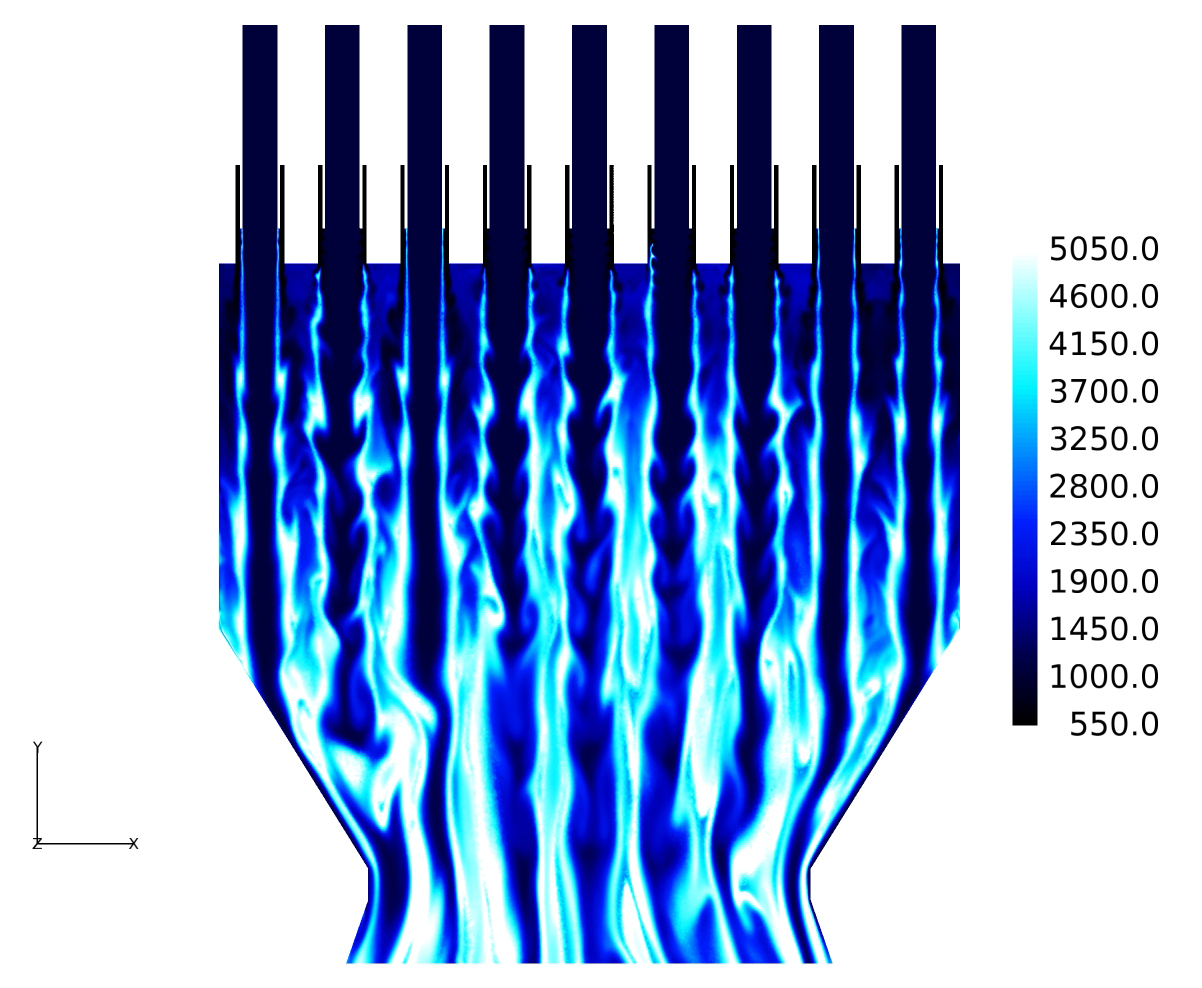
This work would not have been practical without the NASA HPC resources. The Pleiades supercomputer was used for all numerical simulation work.
The methane ignition and combustion spreading simulation alone required approximately 1.1 million processor hours, and took about four weeks to complete due to the computationally demanding finite-rate chemistry model used. The entire project work required the use of about 8.5 million processor hours on Pleiades and 150-plus terabytes of disk storage over the period of a year.
What's Next
Higher fidelity, complex fluid physics models are being developed, implemented, and tested in the CFD algorithm. These include propellant phase change, droplets, and volume-of-fluid models, which will be added in future ignition simulations.
More Information
- See the poster for this demonstration (PDF, 1.8MB). As shown in the NASA booth at SC18.
brian.r.richardson@nasa.gov Kalen Braman, NASA Marshall Space Flight Center
kalen.e.braman@nasa.gov