
Enabling Exascale Science with the GEOS Earth System Model
Overview
The Goddard Earth Observing System (GEOS) model, developed by the Global Modeling and Assimilation Office (GMAO) at NASA’s Goddard Space Flight Center, has been using a finite-volume cubed sphere (FV3) dynamical core since FV3 development back in 2007. The scalability of this unique dynamical core has allowed the GEOS modeling system to explore the boundaries of global atmospheric prediction since its inception. FV3 has supported a wide range of modeling requirements within NASA, from Modern-Era Retrospective analysis for Research and Applications, Version 2 (MERRA-2) runs at 50-kilometer (km) global resolution all the way down to global cloud-resolving applications, first at 3 km in 2009 and then at 1.5 km in 2015 with a non-hydrostatic version of FV3.
Project Details
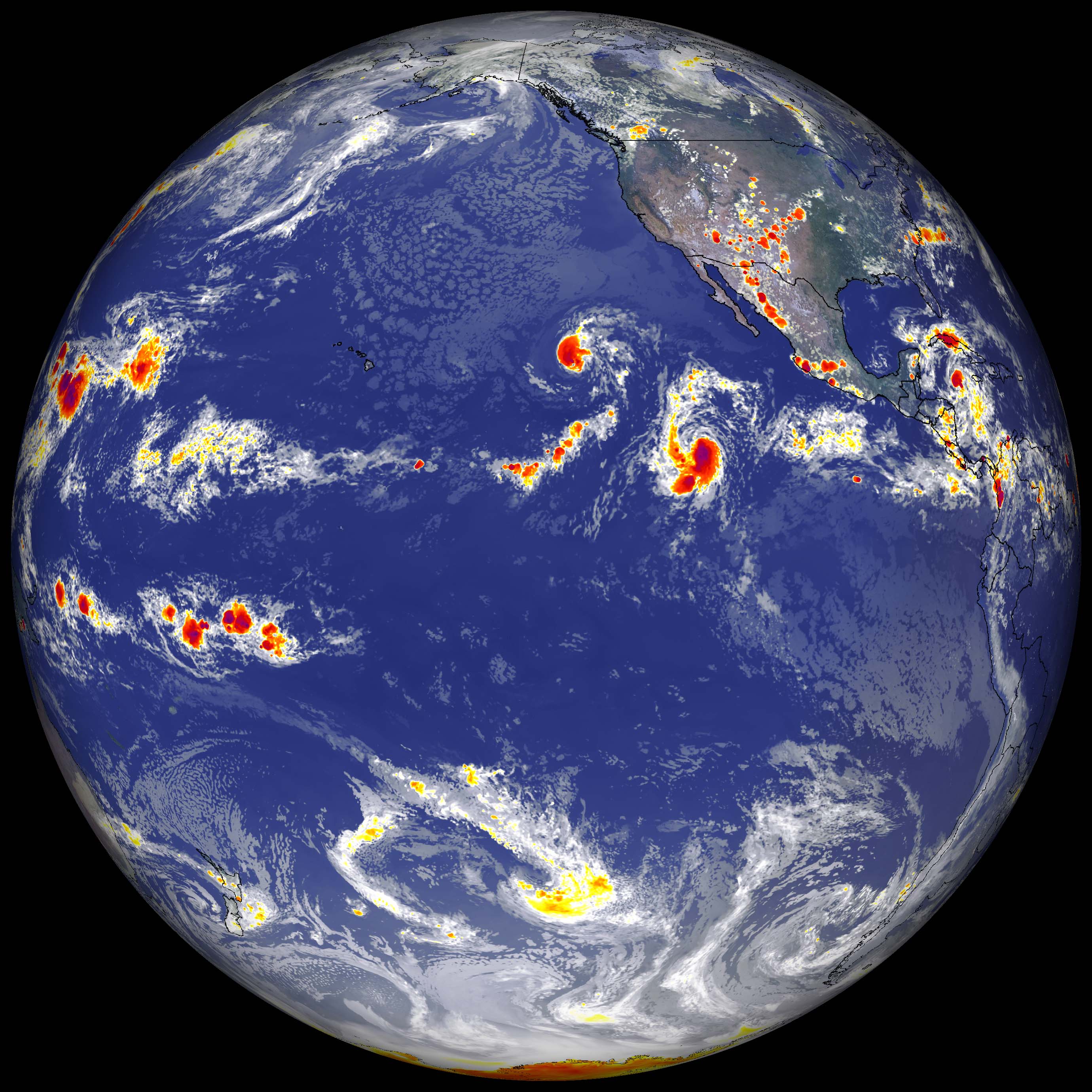
Similar to most Earth system models, GEOS requirements over the next 10+ years include significant increases in resolution and complexity in order to build a fully coupled model. The computational and storage requirements for the resulting large-scale coupled simulations is driving NASA toward exascale architectures. However, many application questions have emerged, including the scalability of GEOS on the emerging exascale architectures.
Results and Impact
Our latest performance results and key scientific achievements on existing petascale platforms at NASA demonstrate the current capabilities of GEOS in data assimilation, weather, and seasonal prediction. Emerging capabilities with the high-resolution, fully coupled Earth system model point to the potential for coupled data assimilation over the next few years. Cutting-edge GEOS simulations approaching cloud-resolving resolutions hint toward the demand for exascale systems and new technologies, including hybrid multi-core processors and machine learning, to meet the increasing demands of the GEOS Earth system model and processing of Earth science data at NASA.
Why HPC Matters
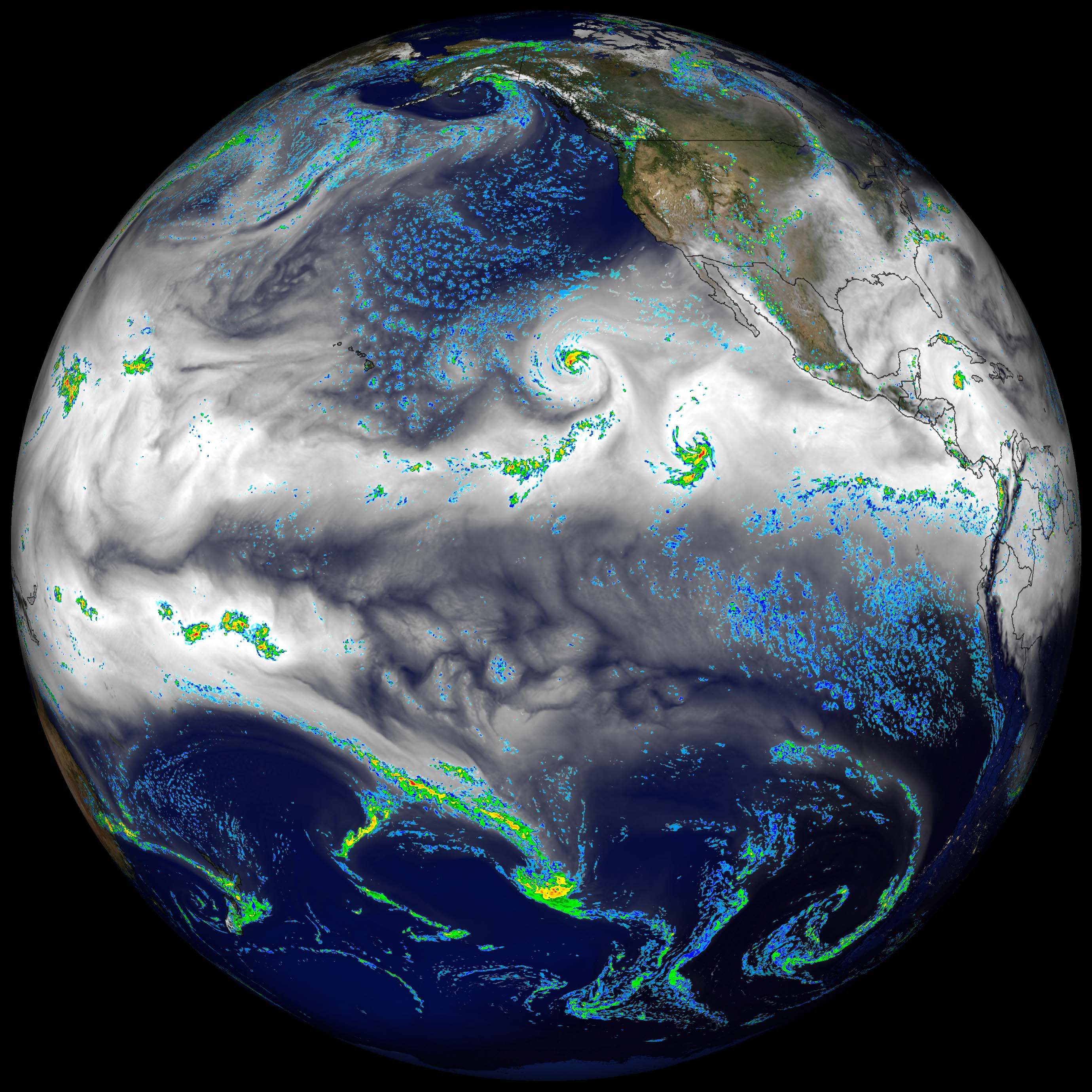
High-end computing (HEC) at NASA, specifically the NASA Center for Climate Simulation (NCCS) and the NASA Advanced Supercomputing (NAS) Division, provides an essential resource for preparing our modeling systems for emerging HEC systems and exploring new science developments. While current GEOS configurations require thousands of computational cores, configurations over the coming decade will require scalability approaching millions of cores. Exposing additional parallelism within GEOS becomes essential for reaching these scalability targets. Partnerships with the NCCS and NAS support our exploration of traditional hybrid parallelism approaches within GEOS today and prepare our models for future HEC platforms by exposing new depths of parallelism within our application components.
More Information
- Global Modeling and Assimilation Office
- See the poster for this demonstration (PDF, 1.8MB). As shown in the NASA booth at SC18.
william.m.putman@nasa.gov