
Leveraging Mother Nature’s Peculiarity at Small Scales to Build Faster Computers
Overview
Harnessing the quantum nature of matter to accelerate numerical tasks is an idea that has intrigued researchers and the public for many decades. The arrival of the first quantum computers has ignited the field, marking a milestone and leading to more active research and publicity than ever before. Quantum computing articles now appear in the daily news cycle. Although the field has certainly passed a milestone, these are the very first quantum computers, and, like the first digital computers, there is considerable ground to be broken at both the hardware and algorithm levels before achieving quantum supremacy. To achieve quantum supremacy, a quantum computer must be able to perform a numerical task faster than a classical computer running the best-known algorithm.
We investigate the capabilities, limitations, and overall performance of the IBM Q quantum gate computer, as well as the D-Wave 2000Q quantum annealer at NASA’s Quantum Artificial Intelligence Laboratory. We used the D-Wave with an algorithm to register NASA satellite imagery and the IBM Q to solve linear systems with the Harrow, Hassadim, and Llyod (HLL) algorithm.
Project Details
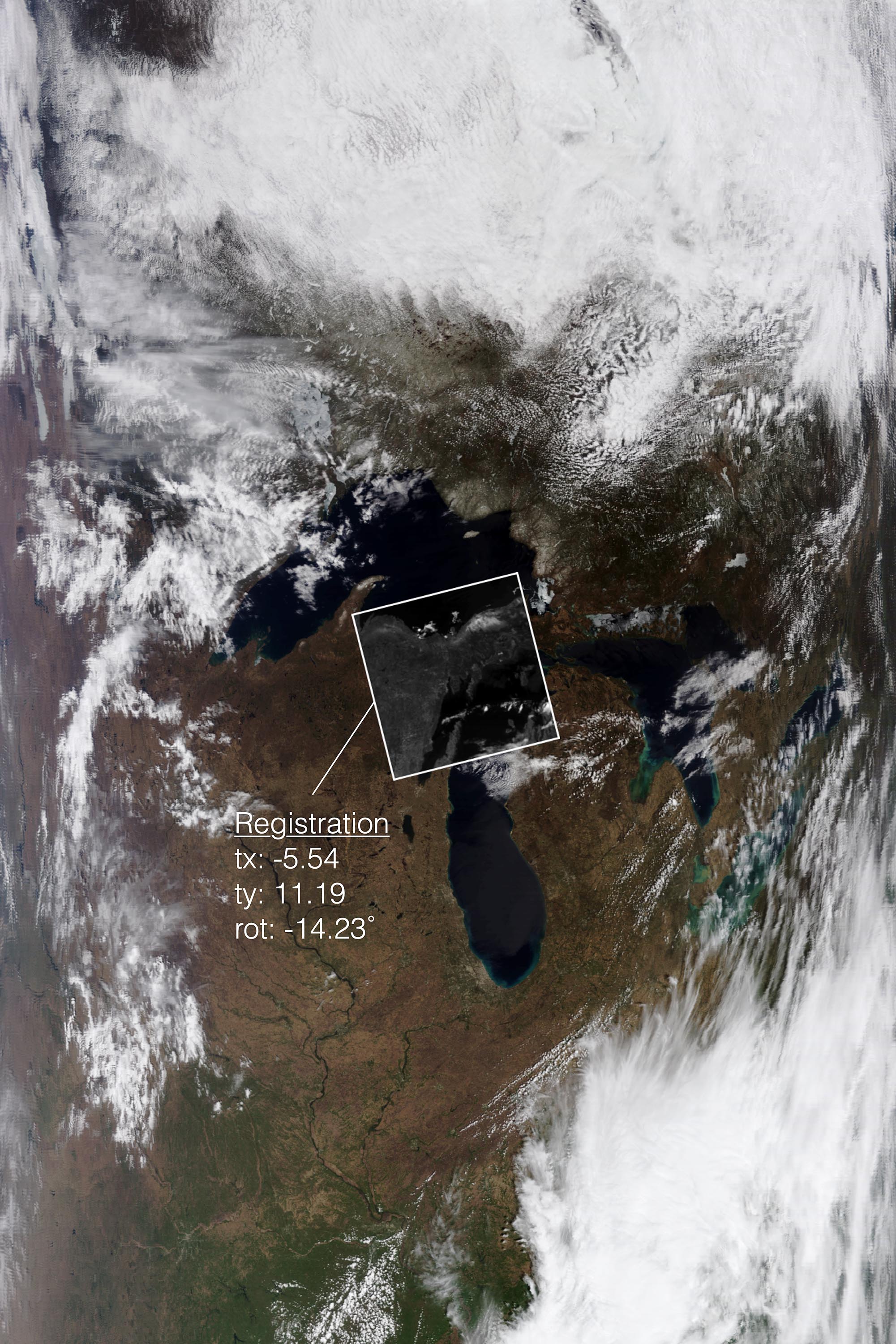
NASA satellite imagery of the land-surface is an integral part of many applications at NASA Goddard Space Flight Center. Due to the satellite’s flight path and position, viewing angles of co-located regions differ slightly. The alignment or registration of these images is essential to creating time series and reducing analysis error. We use a machine learning model with a Restricted Boltzmann Machine (RBM) as a stochastic auto-encoder. Training the RBM is compute intensive, with the generation of Boltzmann Statistics incurring the largest cost. We use the D-Wave to generate statistics by sampling the ground state of the spin-Ising quantum chip and then use these statistics to train the RBM.
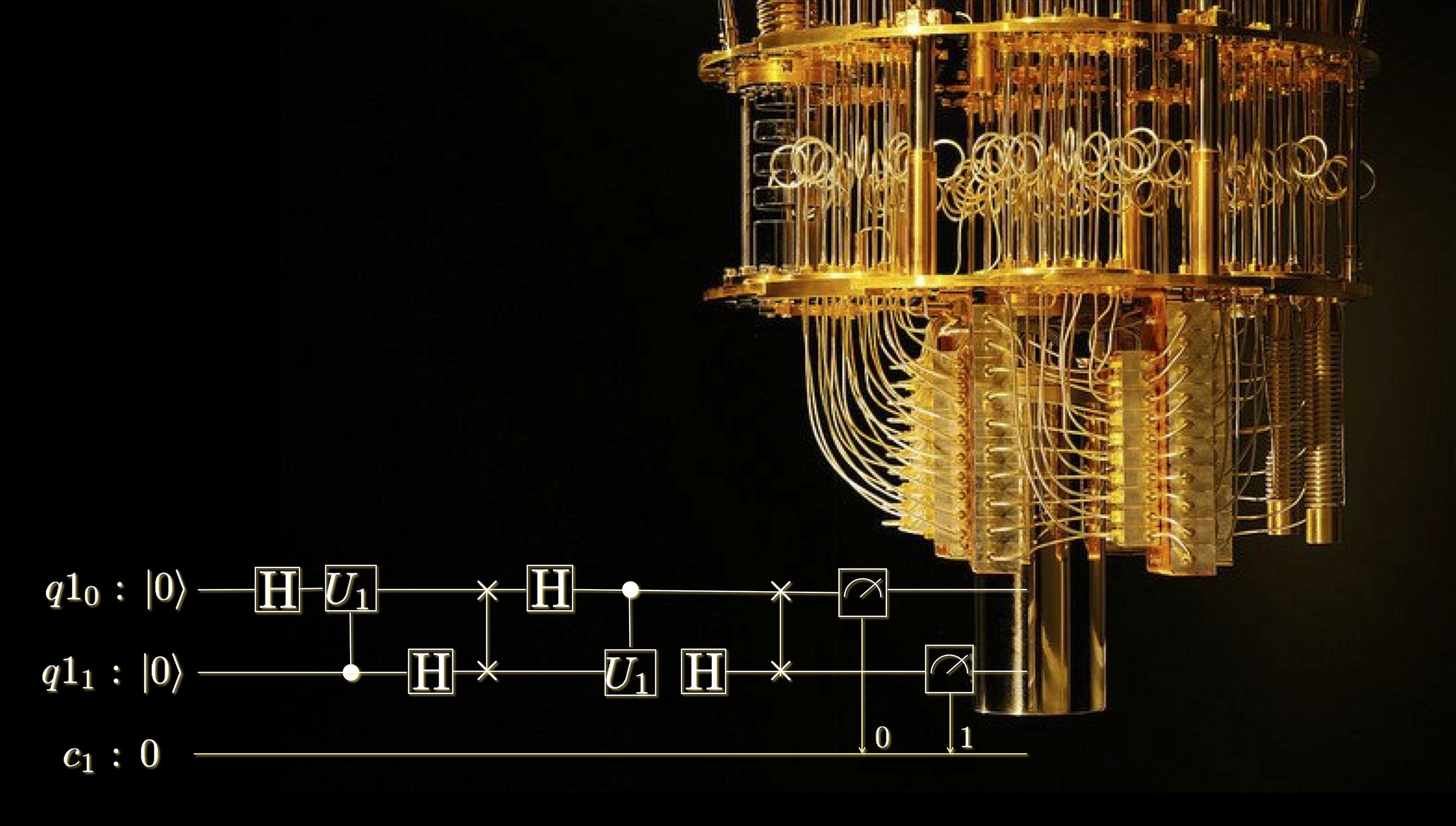
We implement the HLL algorithm on the IBM Q quantum gate computer and solve a four-dimensional linear system. The HLL algorithm involves executing the Quantum Fourier Transform (QFT) and the Quantum Phase Estimation (QPE). These operations are tested on a simulator and compared to the performance on the IBM Q. Due to the limited quantum coherence time, the results are noisy and tentative. Measuring the decoherence for CNOT gates shows there is significant degradation after only a few tens of gates.
Results and Impact
To understand the role quantum computing could play in NASA missions, we have investigated the D-Wave quantum annealer and the IBM Q quantum gate computer. We have implemented an RBM trained on quantum annealing statistics in the context of image registration and the HLL algorithm on the IBM Q to solve linear systems. These investigations help NASA determine the current state of quantum computing and its potential to accelerate numerical tasks for missions, as well as foster new ideas and techniques to harness the power of this up-and-coming technology.
Why HPC Matters
NASA’s use of supercomputers to carry out large scientific simulations is ubiquitous and plays an essential part to its missions. Limitations on current hardware have signaled the end of the two-fold increase in computational resources that has been seen roughly every 2 years over the last few decades. As researchers push towards ever-more accurate simulations, their success hinges on high-performance computing (HPC) meeting their computational demands. Quantum computing represents a fundamental shift in the way computing is carried out and has the potential to be a game-changing technology that will continue to advance the state of HPC.
More Information
- See the poster for this demonstration (PDF, 1.4MB). As shown in the NASA booth at SC18.
craig.s.pelissier@nasa.gov Troy Ames, NASA Goddard Space Flight Center
troy.j.ames@nasa.gov