
Explorations at the Frontier of Quantum Computing
Overview
Meeting NASA's future mission challenges—from planning the actions of a rover to scheduling tasks on the International Space Station—will require novel computational methods to solve such problems in less time and at larger scales. Quantum computing holds the promise of more efficiently tackling these difficult problems, and significant progress has been made in developing quantum hardware to realize that promise in the near term. NASA's Quantum Artificial Intelligence Laboratory (QuAIL) team explores the potential of quantum computing's ability to meet mission challenges, and develop methods for programming and testing existing and future quantum hardware.
Project Details
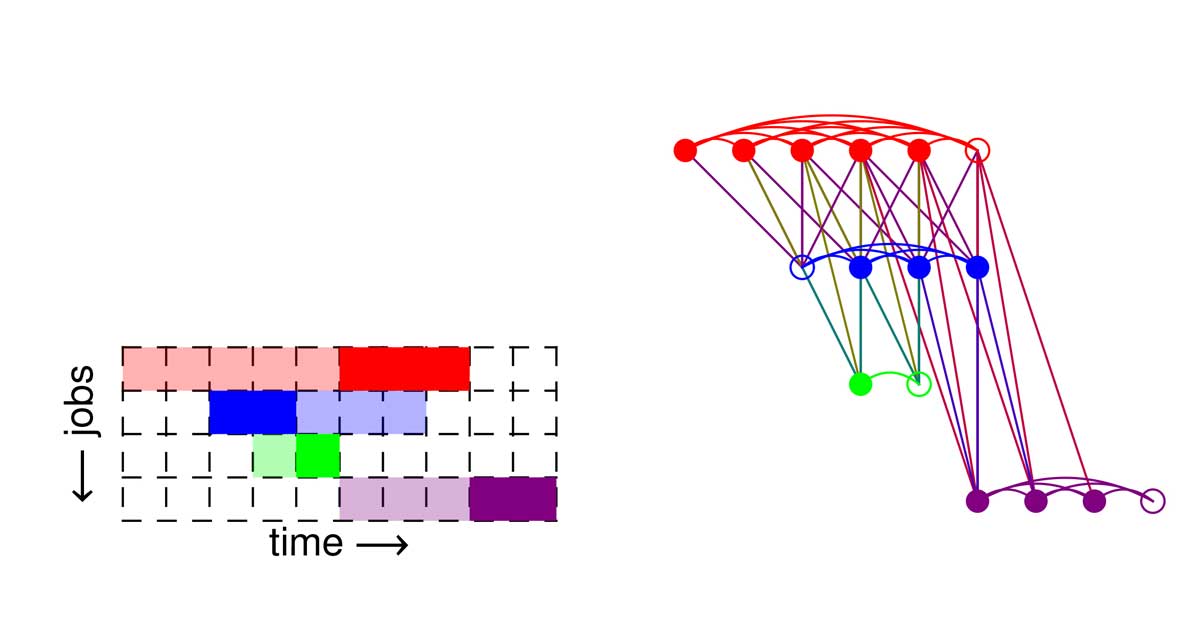
Maximizing the usefulness of early quantum hardware requires both an understanding of its unique advantage over classical alternatives and the use of application-specific optimization. To that end, the QuAIL research team works closely with external experimental teams who are developing such hardware and with application-domain experts within NASA who are working on hard computational problems.
Results and Impact
Since the QuAIL project was founded in 2013, the team's advancements in the state of quantum computing include:
- Programming techniques and benchmarking results for many applications, including planning and scheduling, diagnosis of electrical faults, and training Boltzmann machines.
- Identifying the unique strengths of quantum approaches thorough comparison of quantum annealing with analogous classical heuristics.
- Developing proven, precise methods for benchmarking, characterizing, and calibrating quantum annealers.
- Discovering parameterized random ensembles of scheduling problems for benchmarking.
Why HPC Matters
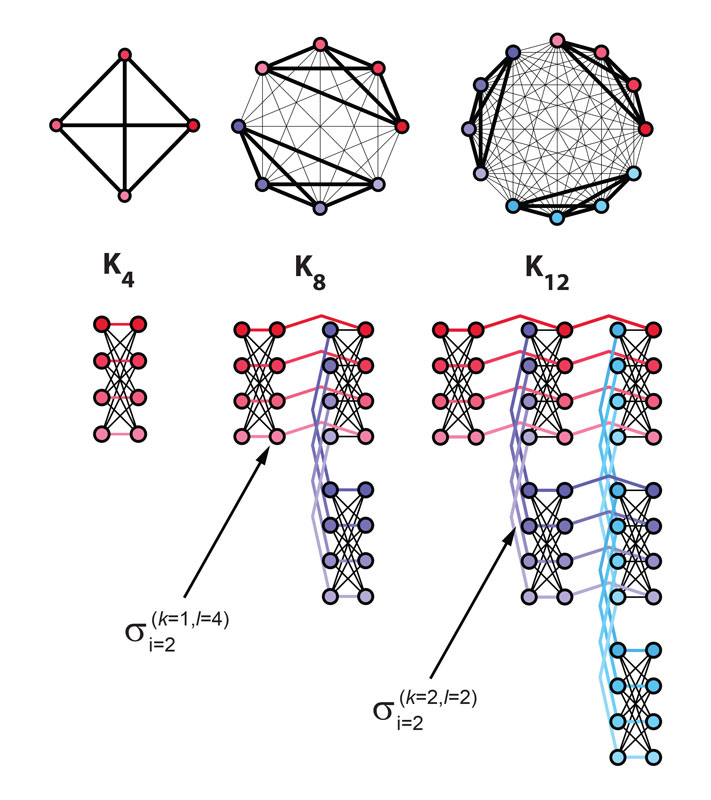
Quantum computing augments, rather than replaces, classical computation. Solving real-world problems requires integrating quantum calculations as subroutines in classical algorithms, much like the way graphics processing unit (GPU) technology is currently used. In addition, classical high-performance computing (HPC) is used in the development of quantum computers and algorithms through simulations, benchmarking, analysis of results, and so on. In this way, progress in quantum computing and other components of HPC proceed in a virtuous cycle. As with many other NASA technologies, quantum computing research is likely to produce spin-offs that are useful for classical computing as well.
What's Next
Quantum computing is still in its infancy but is maturing rapidly. Teams around the world are racing toward "quantum supremacy"—that is, achieving real quantum hardware capable of demonstrably outperforming all existing classical hardware. Together with experimentalists and theorists around the world, the QuAIL team contributes to advancing that goal and situating NASA to maximize its advantage when that goal is met.
Bryan O'Gorman, NASA Ames Research Centerbryan.a.ogorman@nasa.gov Eleanor Rieffel, NASA Ames Research Center
eleanor.rieffel@nasa.gov