Future Directions for NASA High-End Computing—Illustrated by an Earth Science Project
Overview
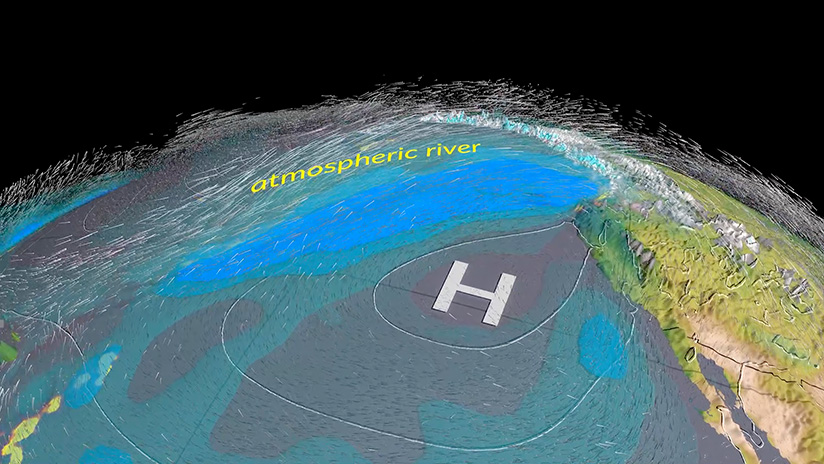
Two external forces are impacting NASA’s modeling and simulation efforts. First is the availability of exascale computing systems. Already, the Department of Energy (DOE) Frontier system at Oak Ridge National Laboratory (ORNL) has four AMD graphics processing units (GPUs) on a compute node. NASA must also modernize and refactor its modeling systems to leverage exascale computing architectures. Concurrently, NASA’s Science Mission Directorate is updating and implementing its data management and computing system strategy to include an open-source science initiative (OSSI) towards the related goals of making scientific data and software open and encouraging collaboration. Under OSSI, the Core Services for Science Discovery project will develop core data and computing services, and the Transform to Open Science project will build a community to accelerate the adoption of open source. NASA is demonstrating an Earth science project to meet these challenges.
Project Details
High-performance computing (HPC) and modeling play critical roles in enabling NASA’s Weather and Atmospheric Dynamics Focus Area (WADFA) to better understand the Earth system and improve predictions of weather as well as extreme weather events. As part of that focus, in the next few years, NASA’s Global Modeling and Assimilation Office (GMAO) will develop and mature a coupled Goddard Earth Observing System (GEOS) modeling and data assimilation system for subseasonal to seasonal prediction. The coupled system will also help the GMAO produce a multidecade Modern-Era Retrospective analysis for Research and Applications version 3 (MERRA-3) data product.
NASA’s High-End-Computing program is exploring ways to port NASA model codes to exascale systems and aligning with OSSI to accomplish WADFA’s ambitious goals. A major activity is supporting the NASA Center for Climate Simulation (NCCS) and GMAO in the GEOS model code modernization and porting effort to better prepare NASA Earth system modeling (ESM) efforts for exascale systems. After two years of painstaking effort, we are beginning to see the light at the end of the tunnel. In another year or two, NASA will have an ESM capable of running at extremely high resolution (i.e., under 1 kilometer) on an exascale computing system.
Results and Impact
The goal of this modernization and porting project is to reach the threshold set by the DOE’s exascale computing project and be able to run on 1/5 of an exascale computing system by 2024. Without such a capability, some of NASA’s most innovative, ground-breaking science and engineering projects would not be possible.
Why HPC Matters
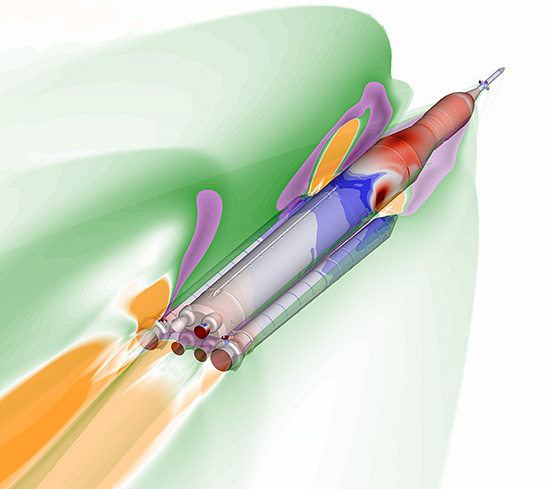
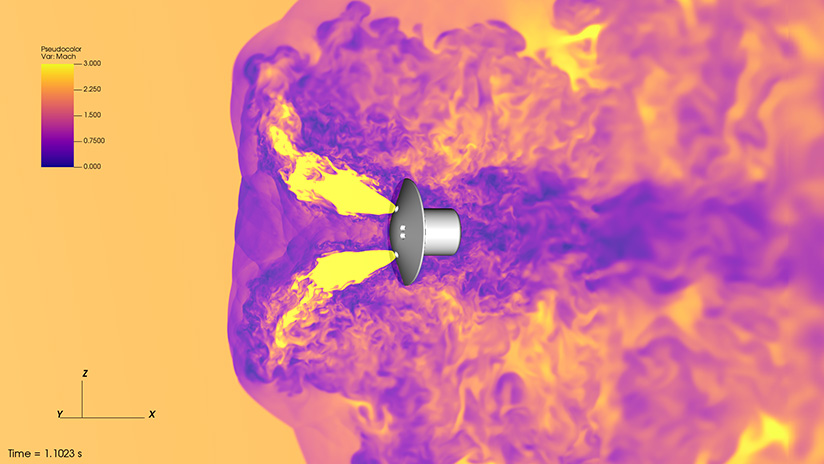
NASA High-End Computing supports an array of computationally taxing projects to enable the agency to confront grand challenges and drive advances in science and engineering for the benefit of humanity. Leading-edge projects such as recent human-scale Mars landers simulations, Artemis II booster separation simulations, and the next-generation GEOS model are all enabled by these HPC resources.
What's Next
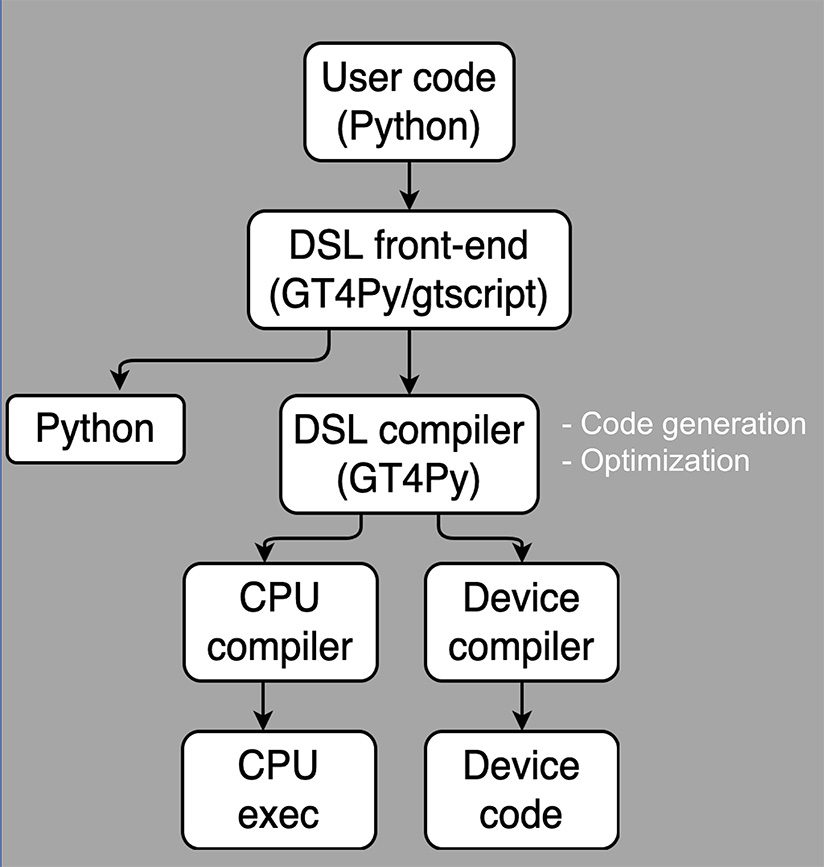
For NASA to tackle its most taxing projects, we must be able to port our scientific modeling codes to exascale systems. This work has already begun through the Domain Specific Language (DSL) project launched three years ago. To meet our goals and successfully complete this project by 2024, the agency must recruit more experienced software engineers with particular expertise in GPU architectures.
More Information
Researchers
- Tsengdar Lee, NASA Headquarters Please enable Javascript to see email address.
- Dan Duffy, NASA Goddard Space Flight Center Please enable Javascript to see email address.
- William Putman, NASA Goddard Space Flight Center Please enable Javascript to see email address.
- Elizabeth Howell, NASA Headquarters Please enable Javascript to see email address.