Optimizing Aircraft Performance for Enhanced Efficiency and Reduced Environmental Impact
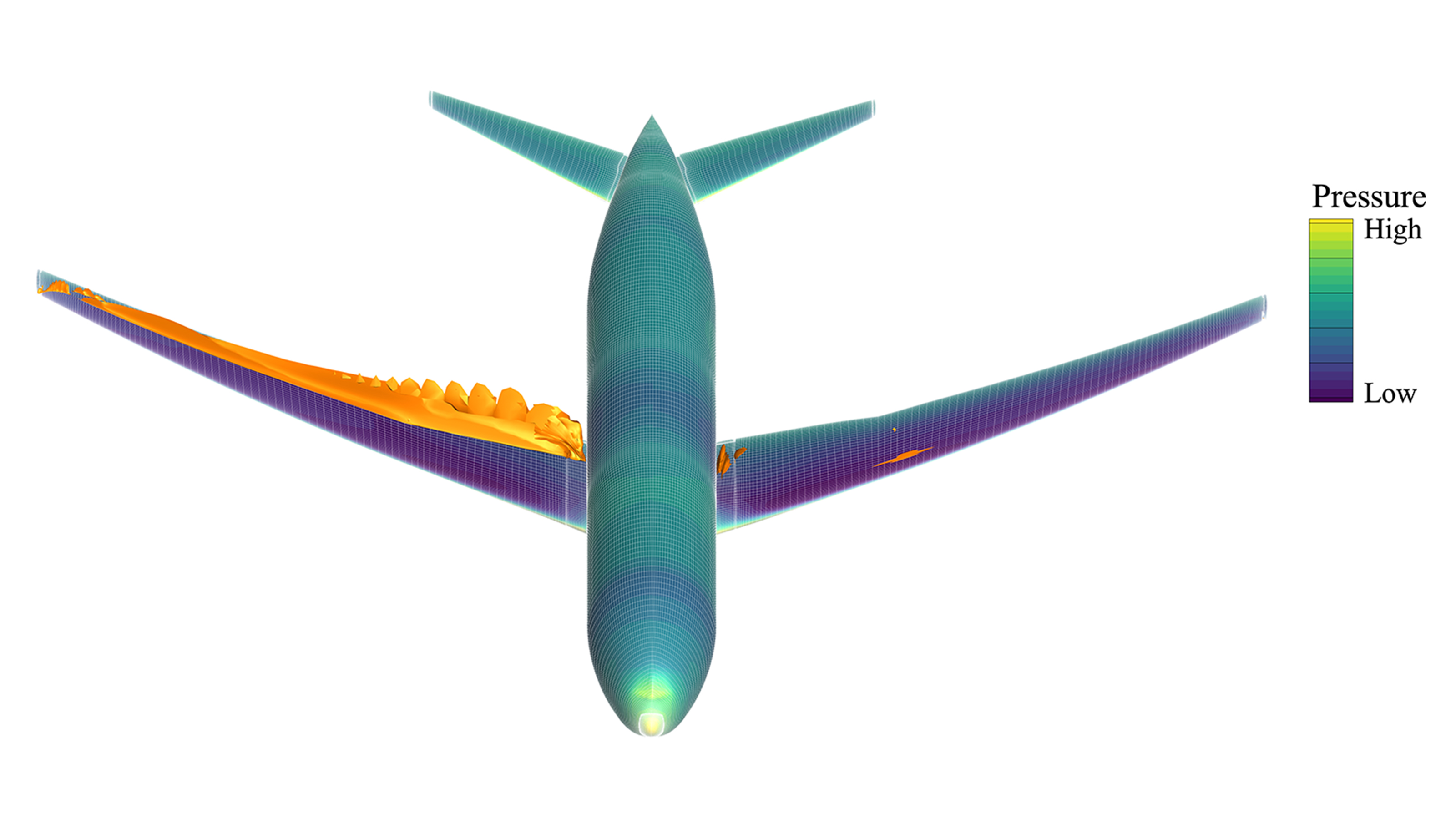
Since its inception, NASA has focused significant research and funding on making commercial aircraft more efficient and sustainable. Today, one of the key challenges is cutting fuel consumption without compromising safety or performance. Aerodynamic shape optimization plays a pivotal role in overcoming this challenge by refining aircraft designs to reduce air resistance, or drag, while maintaining safe flight characteristics. By fine-tuning the shape of wings, fuselages, and other components, aircraft designers can lower the energy required for flight, resulting in fuel savings, reduced emissions, and enhanced overall performance. Additionally, optimizing aerodynamics can help reduce noise levels, thereby minimizing disturbances for people on the ground. This approach makes air travel more environmentally friendly and cost-effective for airlines. With the rise in air traffic and growing climate concerns, improving aircraft design is more important than ever. The Launch, Ascent, and Vehicle Aerodynamics (LAVA) group at NASA’s Ames Research Center supports these goals by utilizing computational fluid dynamics and optimization techniques to automatically enhance aircraft shapes, reduce noise, and improve efficiency.
NASA supercomputing resources enable aerodynamic shape optimization by performing complex simulations and calculations at high speeds, allowing for the efficient analysis and adjustment of aircraft designs to improve performance.
Brandon Lowe,
NASA Ames Research Center
Quick Facts
- Aerodynamic design optimization requires running hundreds of simulations to explore a variety of design possibilities. The optimization of a full aircraft configuration using 32 Skylake nodes (1,280 cores) of the Electra supercomputer can take up to 100 hours to complete.
- By applying aerodynamic design optimization to an existing airplane configuration, the LAVA team was able to reduce the drag by up to 4%. This reduction translates to significant fuel savings in real-world applications, highlighting the potential of optimized designs to greatly enhance aircraft efficiency.
- Aerodynamic shape optimization goes beyond improving existing aircraft designs; it can also drive the development of novel aircraft shapes, enable the advancement of electric or hybrid planes, and support the return of commercial supersonic flight.
- The team’s next goal is to make the simulations more computationally efficient, allowing them to perform these high-fidelity optimizations faster and using fewer computational resources.
Researchers
- Brandon M. Lowe, NASA Ames Research Center Please enable Javascript to see email address.
- Jeffrey A. Housman, NASA Ames Research Center Please enable Javascript to see email address.
