NASA's Newest Hybrid-Chip Systems
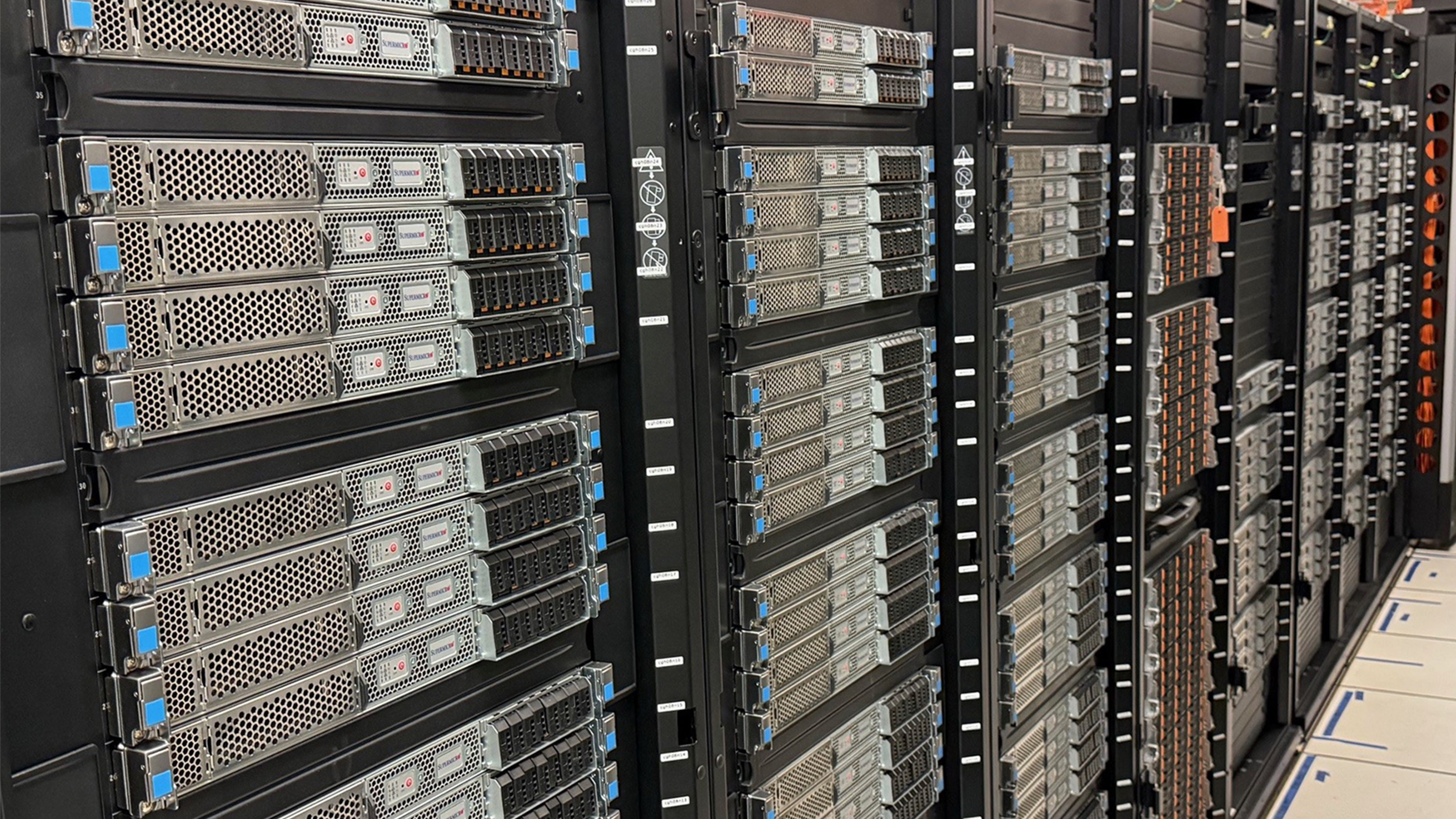
The NASA Center for Climate Simulation (NCCS) is striving to provide more powerful GPU-based processing to its user community of scientists and engineers. GPUs have capabilities particularly suited to enabling two distinct types of science: 1) weather and climate simulations using models such as NASA’s Goddard Earth Observing System (GEOS); and 2) novel applications using more cutting-edge artificial intelligence/machine learning (AI/ML) toolsets. GPUs’ high matrix calculation capabilities are driving a complete re-write of the GEOS code from the ground up. Initial GEOS results on NVIDIA Grace Hopper nodes are providing exciting prospects for remarkable increases in performance and model resolution. In addition, GPUs are enabling NASA workflows including processing Transiting Exoplanets Survey Satellite (TESS) data with TensorFlow software to discover new asteroids and performing visual transformations on satellite data with PyTorch software to allow environmental data processing. The team ran initial benchmarks on NVIDIA Grace Hopper and Grace-Grace CPU-GPU hybrid chip test systems. These benchmarks demonstrate dramatic performance improvements over existing NASA systems and have led to significant upcoming investments in further GPU systems at the NCCS.
NASA HPC resources enabled our Data Science Group to accelerate week-long processes to a matter of hours driven by large-scale GPU processing of very-high-resolution data. This capability also opened the possibility of scaling deep learning model training, enhancing both the accuracy and accessibility of our remote sensing data-driven products.
Jordan Caraballo-Vega,
NASA Goddard Space Flight Center
Quick Facts
- The NVIDIA Grace Arm CPU’s software ecosystem is surprisingly robust and easier to integrate than expected.
- One challenge to porting workflows was the limited availability of pre-compiled Python-based CUDA AI/ML libraries for the GPUs.
- Another obstacle is that NVIDIA’s container-based software distribution model is difficult to integrate into existing workflows.
- On the whole, the Grace-Grace CPU systems provided better performance per watt than existing Intel and AMD CPU systems.
Researchers
- Reid Ormseth, NASA Goddard Space Flight Center Please enable Javascript to see email address.
- Brian Roth, NASA Goddard Space Flight Center Please enable Javascript to see email address.
