Modeling Observations of NASA Heliophysics Missions from Realistic Simulations of the Sun
Overview
The solar atmosphere is a natural plasma physics laboratory. It hosts various processes happening in hot magnetized plasmas: dissipation of electric currents, magnetic reconnection, eruptions, and propagation of magnetohydrodynamic (MHD) waves and shocks. However, because we cannot directly observe many of these processes, we perform detailed measurements of the temperature, density, velocity, and other physical properties of plasma in the solar atmosphere. The only insight into these properties comes from remote sensing—observations of spectroscopic lines and broadband emission produced by the plasma.
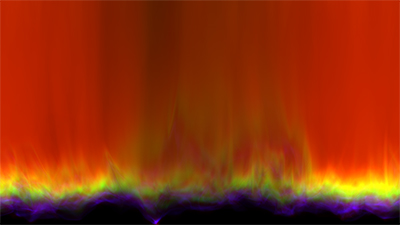
Various NASA missions, including the Interface Region Imaging Spectrograph (IRIS) and Solar Dynamics Observatory (SDO), capture the Sun’s different wavelengths and probe the solar atmosphere at various heights and plasma temperatures. But how can we correspond these remote sensing observations with the properties of the solar plasma? One way to reveal such connections is to employ realistic numerical simulations of the solar atmosphere and then synthesize the plasma emission and spectra observed by NASA spacecraft. The Heliophysics Modeling and Simulations (HMS) project team at the NASA Advanced Supercomputing (NAS) facility at Ames Research Center is employing such a method.
Project Details
Our goal is to understand how the physical properties of the solar atmosphere, such as temperature and density stratifications and energy flows, can be derived from the corresponding spectral and broadband emission observations of NASA missions. In this project, we utilize realistic high-resolution 3D MHD simulations of the solar atmosphere. The simulations are performed for different solar conditions using our in-house StellarBox code. Using the simulation data, we compute various spectral lines and emission, including:
- Bright spectral lines observed by IRIS using the open source RH1.5D radiative transfer code;
- Extreme ultraviolet (EUV) emission observed by SDO’s Atmospheric Imaging Assembly (SDO/AIA) using temperature response functions;
- Fe I 6137 Å Stokes profiles observed by SDO’s Helioseismic and Magnetic Imager (SDO/HMI) using the open source SPINOR code.
We calculate various properties of the line profiles (such as derived Doppler shifts, line and emission enhancements, and deduced magnetic fields) and compare them with the properties of the simulated atmospheres. This work is funded by NASA’s Heliophysics Supporting Research Program.
Results and Impact
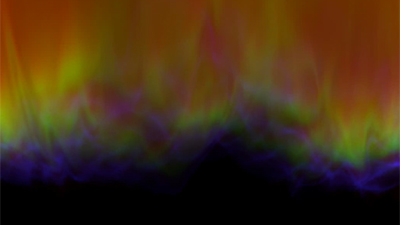
One of the major outcomes of our studies is the discovery of a connection between the properties of shock waves that propagate up into the solar corona and properties of the spectral lines formed in the transition region and EUV emission originating from hot coronal plasma. In particular, we found that the IRIS C II 1334.5 Å Doppler shifts and enhancements of the SDO/AIA 335 Å emission channels demonstrate the strongest correlation with the enthalpy fluxes deposited by shock waves into the solar corona.
The study confirms that it’s possible to estimate energy transport by shock waves into the solar corona, as well as other properties of shocks, from currently operating NASA missions. The numerical models and Fe I 6173 Å Stokes profile synthesis also help us to interpret the SDO/HMI observations. By reproducing the SDO/HMI line‑of‑sight data analysis pipeline, we determine the heights in the solar atmosphere where the magnetic field and plasma velocity are observed, and also determine how these heights depend on the position of the region of interest on the solar disk. The results of our studies allow us to better understand the observations from NASA missions and to learn more about the hot dynamic plasma in the solar atmosphere.
Why HPC Matters
Modeling the solar spectral lines and emission is a computationally demanding but highly parallelizable problem. To perform this modeling efficiently, we use the Pleiades and Merope supercomputers at the NAS facility. The project has already utilized more than 10 million core-hours, and about 10 terabytes of disk space is used to store and analyze the outputs of the radiative transfer modeling. Python modules available on Pleiades are used to process, analyze, and visualize the data. NAS experts provide several critical services needs for this project, including 24/7 user support and computer science expertise.
Viacheslav M Sadykov, NASA Ames Research Center and Bay Area Environmental Research Instituteviacheslav.m.sadykov@nasa.gov Irina N Kitiashvili, NASA Ames Research Center
irina.n.kitiashvili@nasa.gov Alexander G Kosovichev, NASA Ames Research Center and New Jersey Institute of Technology
alexander.g.kosovichev@njit.edu Alan A Wray, NASA Ames Research Center
alan.a.wray@nasa.gov