Exploring the Stars with HPC
Overview
The Transiting Exoplanet Survey Satellite (TESS) was launched in April 2018 with the goal of exoplanet discovery. Since then, it has observed nearly the entire sky. Each month, TESS provides its collected data in the form of several thousand large pictures called Full-Frame Images (FFIs), each representing the sum of the optical light emitted from a section of the sky during a 30-minute continuous period. With each month’s worth of data amounting to several terabytes, the data presents an overwhelming problem for traditional computational approaches.
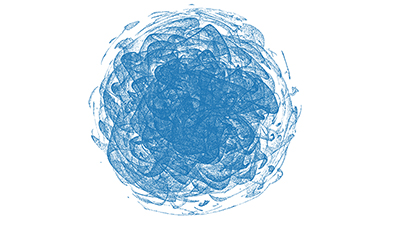
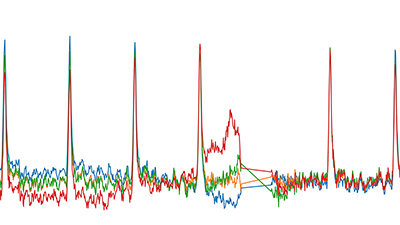
Patterns of light emitted from stars over time can help to determine their nature. For a single star, the light emitted over time is called a light curve. Each month of data from the TESS FFIs contains an average of nearly 3 million stars from which viable light curves can be extracted. Building these 3 million light curves from just a single month of TESS data has a computational cost of several years on a single central processing unit (CPU). As such, an analysis of the entire dataset—now consisting of over two years’ worth of data—is computationally intractable without the use of high-performance computing (HPC).
"This effort would not have been possible without the NASA Center for Climate Simulation providing 100+ CPU-years on the Discover supercomputer to build 70 million light curves, 3+ GPU-years for training neural networks on the ADAPT Science Cloud, and 4+ terabytes of central storage space. Each of these numbers will only grow as this effort continues."
Project Details
We used the NASA Center for Climate Simulation (NCCS) Discover supercomputer to build nearly 70 million light curves, a task encompassing approximately 100 CPU-years. Though this may seem like an end result, it was only the beginning. Extracting the light curves from the raw data still creates an intractable problem, as sorting through 70 million light curves is not a simple task. In order to properly evaluate the light curve dataset, artificial intelligence/machine learning (AI/ML) methods were a necessity. Fortunately, NCCS also provided the resources needed to pursue this effort in the ADAPT Science Cloud’s GPU cluster. By examining representational spaces and ultimately training neural network classifiers, both on ADAPT, we were able to use AI/ML to identify specific types of stars. This effort has been successful beyond our expectations and is still expanding.
Results and Impact
To date, we have identified candidates for:
- 450,000 eclipsing binary star systems
- 25 triple star systems
- 73 quadruple star systems
- 1 sextuple star system
- 300+ heartbeat stars
- 150+ exoplanets
- 3 circumbinary planets
This list is not comprehensive and continues to grow by the day!
Why HPC Matters
This effort would not have been possible without NCCS providing 100+ CPU-years on Discover to build 70 million light curves, 3+ GPU-years for training neural networks on ADAPT, and 4+ terabytes of central storage space. Each of these numbers will only grow as this effort continues.
What's Next
TESS is now entering a new cycle where it will observe nearly the entire sky once again. This time, the observations will be at an even faster cadence, 10 minutes versus 30 minutes previously. This means that each light curve will have three times as much data as all the light curves built to date, furthering the importance of HPC to the effort. We will continue with search (and discover!) as we enter this new phase, relying on NCCS to provide the AI/ML and HPC resources that facilitate our progress.
Related Links
Brian P. Powell, NASA Goddard Space Flight Centerbrian.p.powell@nasa.gov