Identifying the Genetic Ancestry of COVID‑19 Patients from New York City
Overview
The COVID-19 pandemic has had a disproportionate impact on minorities in the United States. African-American and Hispanic/Latino communities have been hit particularly hard. Genetic ancestry inference, that is, the characterization of patients’ ancestral origins via analysis of their DNA, provides a means to study the genetic component of COVID‑19 health disparities.
Project Details
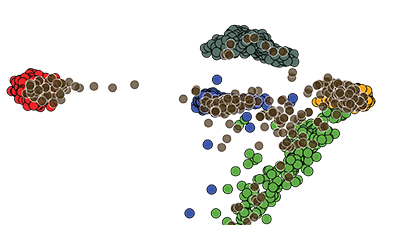
Investigators from the COVID-19 International Research Team (COV‑IRT), co-led by researchers at NASA’s Ames Research Center and Rice University, performed RNA-sequencing (RNA-Seq) experiments for samples taken from 732 COVID‑19 patients in New York City. The analysis team characterized genetic variants from the RNA-Seq data, using NASA high-performance computing (HPC) resources. Comparison of the COV‑IRT RNA-Seq-characterized genetic variants with reference populations from the 1,000 Genomes Project, including reference genomes from Africa, Asia, Europe, and the Americas, was used to infer the genetic ancestry of COVID‑19 patients.
Results and Impact
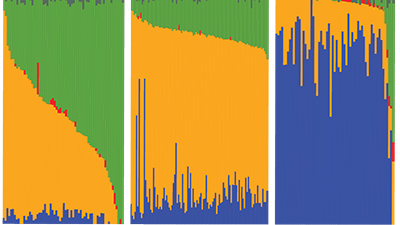
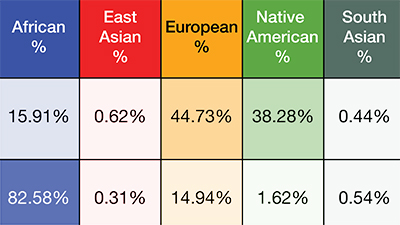
Genetic ancestry inference showed the COV‑IRT patient group (cohort) to be highly diverse. Overall, the cohort showed 21.5% African, 12.9% East Asian, 53.4% European, 8.3% Native American, and 3.9% South Asian ancestry. The team applied machine learning to genetic ancestry principal components in order to classify COV‑IRT patients into five continental ancestry groups: Admixed American (77), African (82), East Asian (46), European (158), and South Asian (17). African ancestry individuals could be further distinguished as Hispanic or non-Hispanic, based on their levels of Native American ancestry. These findings allow members of COV‑IRT to further assess how COVID‑19 impacts patients based on their genetic ancestry, which could lead to more effective treatments and means of prevention.
Why HPC Matters
NASA high-performance computing (HPC) resources and services played a critical in role in generating the data for this project. The COV‑IRT researchers utilized these resources to develop and test three data processing pipelines. HPC experts at NASA’s Ames Research Center were instrumental in helping troubleshoot, debug, and optimize the PBS scripts within each pipeline, allowing for parallel processing of samples and thus reducing processing time. To date, a total of 845 samples (732 patient nasal swabs, 62 NYC environmental swabs, and 51 control samples) have been processed through each pipeline on the Pleiades supercomputer, generating approximately 107 terabytes of data. The project used on average 4 Intel Xeon Haswell nodes for about 19,300 hours, for a total of 77,200 node-hours.
What's Next
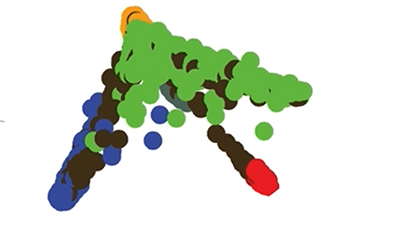
Moving forward, COV‑IRT team members will compare genetic ancestry profiles to gene expression data in an effort to understand how differences in ancestry may be related to the underlying pathology of COVID‑19.
Related Links
- Interactive Principal Components Analysis (PCA) plot showing the genetic relatedness of COV‑IRT patients to reference populations from the 1000 Genomes Project
- The Jordan Lab at Georgia Tech
- The Mason Lab at Weill Cornell Medical College
aconley@ihrc.com Amanda Saravia-Butler, NASA Ames Research Center
amanda.m.saravia-butler@nasa.gov Christopher E. Mason, Weill Cornell Medical College
chm2042@med.cornell.edu Shashwat Deepali Nagar, Georgia Institute of Technology
shashwat@gatech.edu Robert Meller, Morehouse School of Medicine
rmeller@msm.edu