Application Support for Effective Use of NASA HPC Resources
Overview
Hundreds of researchers and scientists from across NASA use the high-performance computing (HPC) resources at the NASA Advanced Supercomputing (NAS) facility at any given time. With so many unique projects and codes, the High-End Computing Capability (HECC) Project provides Application Performance and Productivity (APP) services to users running on HECC systems at NAS. The APP team assists users with a variety of application-related issues, including help porting codes and in-depth performance analysis and optimization. The team’s primary goal is to ensure that the users are able to maximize the science and engineering return they get from use of agency HPC resources.
Project Details
One of the APP team’s primary activities is to seek out projects that consume the most computing time on HECC systems and work with the users to make sure their application codes are as efficient as possible. In 2020, the APP team also helped new users who are conducting COVID-19 research on HECC resources as part of the COVID-19 HPC Consortium. In addition to assisting individual users, the team also conducts investigations into “pathfinding” systems that might be suitable for future HECC procurements, as part of agency’s efforts to continually provide state-of-the-art and hardware to keep up with the ever-increasing demand for more HPC resources.
Results and Impact
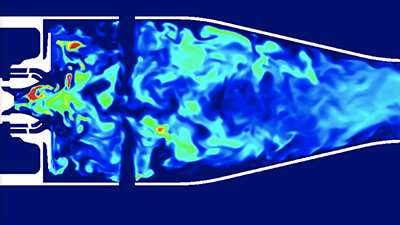
In the past year, the team collaborated with researchers at NASA’s Glenn Research Center to optimize OpenNCC, a high-fidelity, 3D unsteady flow solver used for simulations of combustors in gas-turbine engines. Performance analysis indicated a high level of expensive floating-point operations (such as divide and square root), sites with high-function call overhead, and many small inter-process messages. By addressing these issues, the APP experts were able to achieve a 35% improvement in program performance¬—a savings that could be compared to freeing up nearly a full rack of Broadwell nodes on the Pleiades supercomputer on a continuing basis.
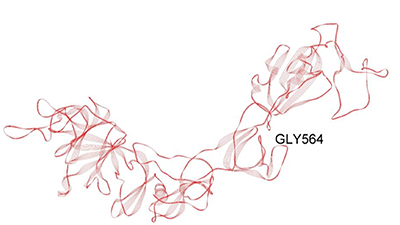
For one of several COVID-19 research projects using HECC resources, the APP team installed, tested, and optimized NAMD, a molecular dynamics application that performs all-atom simulations of the SARS-CoV-2 spike protein’s fluctuations and motions to explore its dynamic and energetic underpinnings. This work included extensive testing of numerous compiler settings and parallel communication approaches, which improved application performance from 17 nanoseconds (ns) of simulation per day up to 25.6–27.7 ns/day. For another project that is working on rapid therapeutic design, the APP team helped install the Genome Analysis Toolkit (GATK) and the R statistical programming language for RNA-sequencing analysis on 848 raw patient datasets, and provided Portable Batch Script (PBS) batch job scripting and remote data transfer assistance. Results obtained by this project have been made available at DNAnexus, a Cavatica-controlled platform at Amazon Web Services, and at the Pittsburgh Supercomputing Center, where other scientists in the COVID-19 International Research Team can use them for further analysis.
Additionally, the APP team recently started evaluating single-node versions of the NEC SX-Aurora TSUBASA, which uses a Vector-Engine-accelerated processor, and the Fujitsu PRIMEHPC FX700, which uses an A64FX ARM-based processor. Both systems use high-bandwidth memory, which may address the very common memory-bandwidth performance bottlenecks seen in NASA’s high-end computing applications. In both cases, the performance results were encouraging, with some benchmark applications exceeding the performance seen on HECC’s newest Intel Xeon-based systems. The next step is to factor those results into HECC’s Fiscal Year 2021 plan for pathfinding activities, including potential acquisition of test systems to conduct in-depth analysis.
Related Links
Robert Hood, NASA Ames Research Centerrobert.hood@nasa.gov Henry Jin, NASA Ames Research Center
haoqiang.jin@nasa.gov