
Modeling Hurricanes and Other High-Impact Weather Systems in High Resolution
Overview
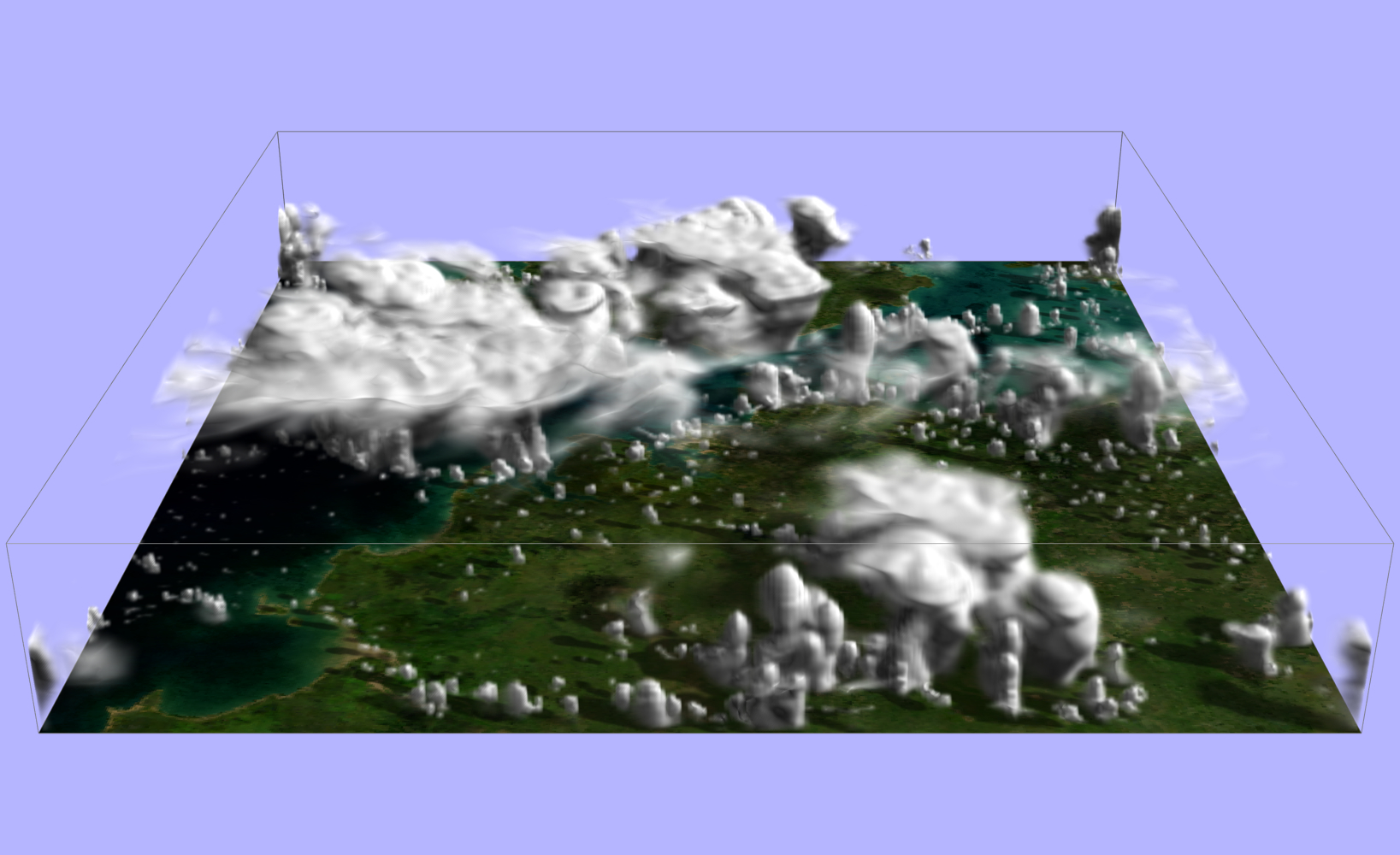
The representation of clouds is a major uncertainty in climate modeling and prediction. One of the most promising methods for improving the representation of cloud processes in climate models is to combine real-world observations with high-resolution cloud-resolving models (CRMs). CRMs use more realistic representations of cloud processes than those in climate models and they can resolve the evolution, structure, and life cycles of clouds, cloud systems, and hurricanes. CRMs also allow for explicit interactions between clouds, outgoing long-wave and incoming solar radiation, and ocean and land surface processes. Observations made by aircraft, satellites, and other means are required to initialize the CRMs and to validate their results.
Project Details
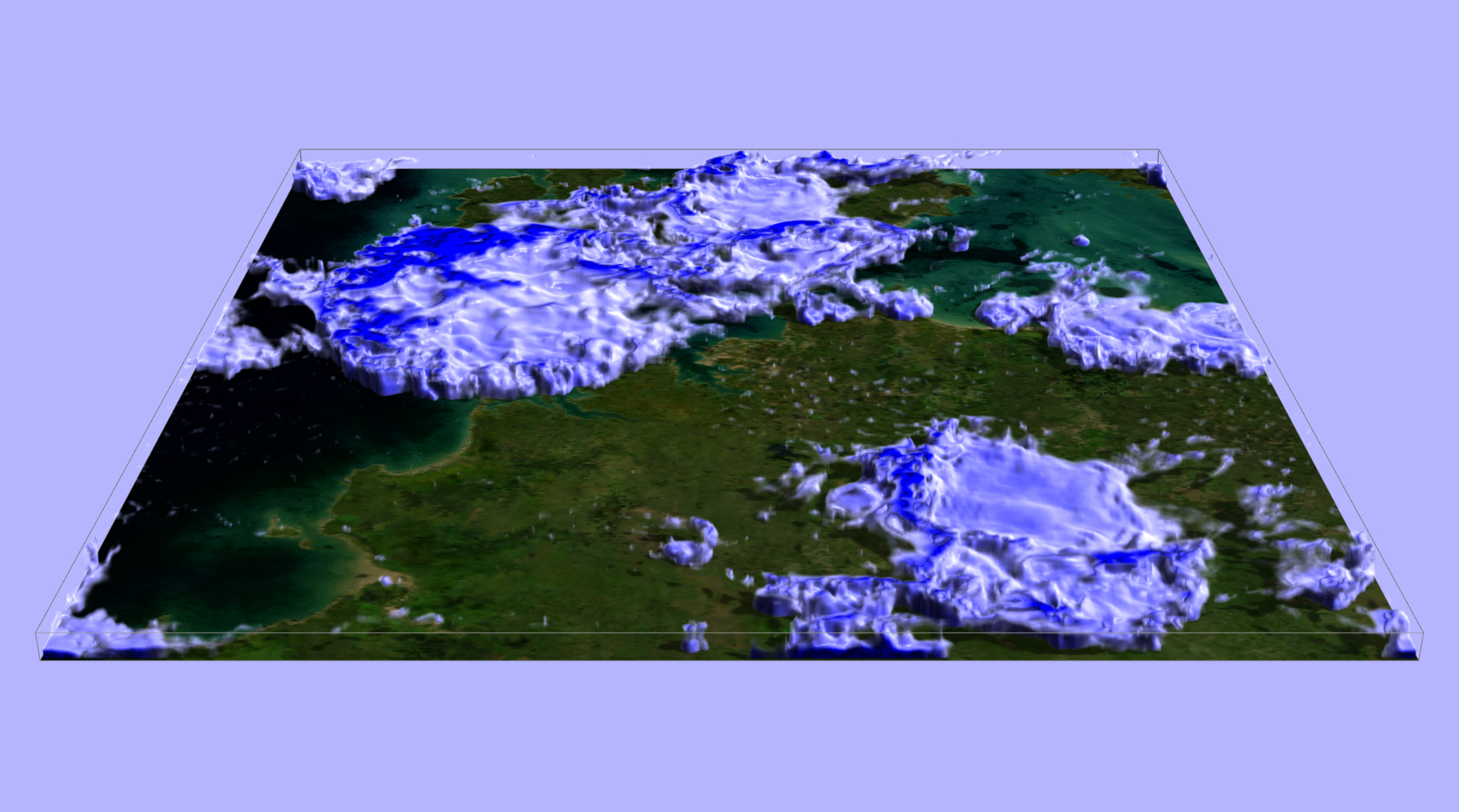
A multi-scale modeling system with unified physics was recently developed at NASA's Goddard Space Flight Center. We used the same physical processes—microphysics, radiative transfer, land surface, and aerosols—in three different Goddard models: the Goddard Cumulus Ensemble model, the NASA Unified Weather Research and Forecasting model, and the Goddard Multi-scale Modeling Framework. This multi-scale modeling system can simulate high-impact weather systems from severe thunderstorms to squall lines to hurricanes. Typically, the modeling system is used with millions of grid points, with a resolution of 1 km or higher to simulate the weather systems. The project is funded by NASA's Precipitation Measurement Missions and Modeling, Analysis, and Prediction programs.
Results and Impact
Our simulations have provided unique and detailed insights into the dynamic and precipitation processes associated with the formation of clouds, cloud systems, and hurricanes. The simulations have also provided 4D datasets to NASA's Tropical Rainfall Measuring Mission developers to improve the performance of their rainfall and latent heating algorithms. In addition, the simulated results have been archived into a cloud library website.
Role of High-End Computing Resources
The vast number of arithmetic operations needed to perform the simulations requires the use of the most powerful supercomputers available. All the simulations were performed on NASA's Pleiades and Discover supercomputers using approximately 2,000 processors. Depending on the nature of the information required, the computational runs could last from days to months, resulting in several petabytes of data. The effective concurrent visualization of such massive datasets was made possible by members of the NASA Advanced Supercomputing (NAS) visualization team at NASA's Ames Research Center.
Xiaowen Li, NASA Goddard Space Flight Centerxiaowen.li@nasa.gov Wei-Kuo Tao, NASA Goddard Space Flight Center
wei-kuo.tao-1@nasa.gov