
Plumes on Venus: Clues to the Planet's Interior
Overview
Since Venus is almost a twin of the Earth—similar in size and formed at the same time from nearly the same materials—it might be expected to have similar interior conditions. However, there appear to be no plate tectonics on Venus; the planet's crust likely comprises only one plate. Observations of volcanoes and surface topology by the Magellan and Venus Express spacecraft indicate the presence of approximately nine plumes—hot, roughly cylindrical structures—extending from the core of Venus, through the mantle, to the crust. Plumes are responsible for producing substantial volcanism that releases volatile gases to the atmosphere, possibly affecting climate change. Creating a model that can match the number and characteristics of these plumes provides strong constraints on the structure and vigor of interior convection. In this way, we can relate interior convection, surface volcanism, and atmospheric volatile history.

Project Details
To determine the physical conditions (material properties, temperatures, and energy fluxes) in the mantle of Venus, we built a numerical model of the planet's interior using OEDIPUS, a code developed specifically to study the internal dynamics of planets. For 13 cases, we used 128 x 128 x 128 grid elements, and for two cases, we used 256 x 128 x 128 grid elements. Matching the results of the numerical model to spacecraft observations enabled us to extract several parameters related to the interior of Venus. Parameters explored in our simulations include temperature-dependent viscosity, Rayleigh number, interior viscosity, interior temperature differences, internal heating, and free-slip and no-slip top and bottom boundaries. All cases were run to thermal equilibrium.
Results and Impact
The mantle plumes on Venus place strong constraints on the planet's interior processes. Our simulations show:
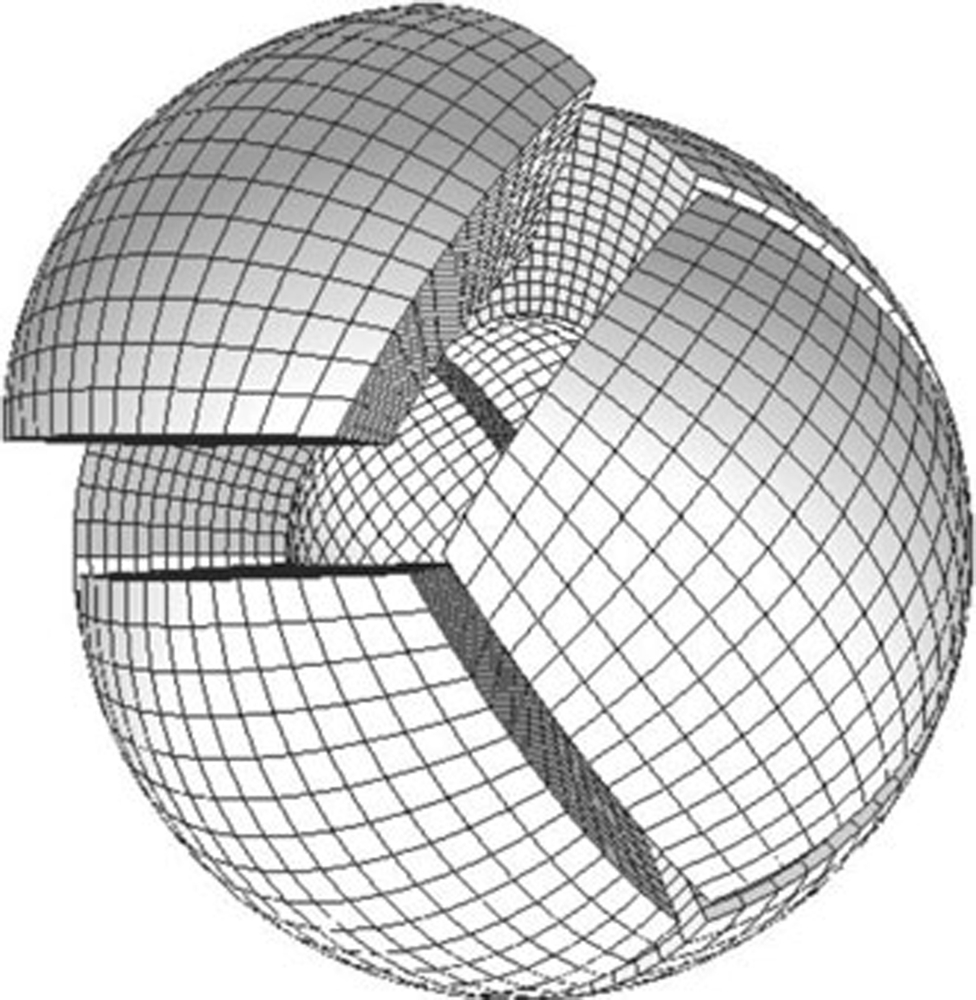
- The mantle of Venus might not be in thermal equilibrium; it may be heating up over time.
- Mantle plumes imply loss of heat from the core, which is believed to drive dynamo activity. However, Venus lacks a dynamo, indicating that the plume-related heat loss on Venus is not sufficient to create a dynamo. This contradiction motivates us to better understand how planetary dynamos operate.
- The number of mantle plumes also constrains the amount of radiogenic elements. Given the predicted mass flux from the plumes and the amount of water estimated to exist in Venus' interior, plume volcanism could provide the observed concentrations of water vapor in the planet's atmosphere.
- Water in the mantle facilitates melting and volcanism. If volcanism occurs only over plumes, it would suggest that water brought up from the lower mantle by plumes is needed to cause wet melting.
Role of High-End Computing Resources
Two-dozen simulations were run on the Pleiades supercomputer at the NASA Advanced Supercomputing (NAS) facility. Our model required long durations to reach steady state and evaluate a wide range of parameters. Each simulation used many processors in parallel.
Timofey Ovcharenko, NASA Jet Propulsion Laboratorytimofey.ovcharenko@jpl.nasa.gov Suzanne Smrekar, NASA Jet Propulsion Laboratory
suzanne.e.smrekar@jpl.nasa.gov