
NASA's Exploration in Quantum Computing
Overview
NASA recently embarked on a journey to explore the potential for quantum computers to tackle real-world problems that are difficult or impossible for traditional supercomputers to resolve accurately and in a realistic time frame. The project is a five-year collaborative effort among NASA, Google, and the Universities Space Research Association.
Project Details
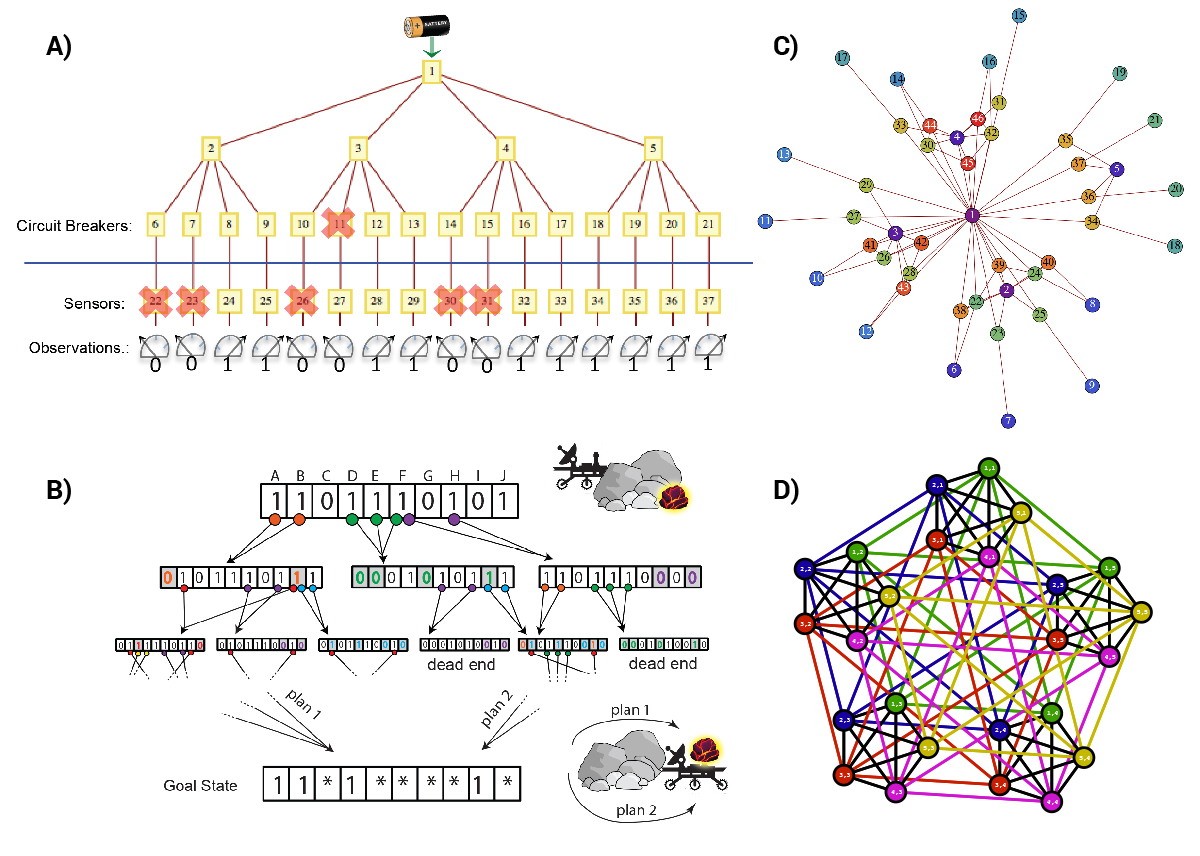
NASA researchers are employing a 512-qubit D-Wave Two system to investigate areas in which quantum computing and quantum algorithms may dramatically improve our ability to solve difficult computational challenges in aeronautics, Earth and space sciences, and space exploration.
Results and Impact
Early research areas of interest being explored at NASA include:
- Advanced diagnosis and fault management in engineering systems, for example, the detection of multiple faults in complex electrical power networks such as those in the International Space Station (ISS).
- Automated mission planning to determine the best use of limited resources—including time and electrical power—for ongoing space missions such as Mars Curiosity and the ISS, as well as future space missions with multiple rovers.
- Scheduling algorithms to efficiently and automatically determine the optimal time for making Low Earth Orbit satellite observations; and to determine aircraft flight routes and landing sequences in airports, taking into account weather conditions and air traffic management priorities.
- Evaluation of the fundamental comparative advantages of quantum optimization on hard computational problems (e.g., spin-glasses) against classical algorithmic methods.
Why HPC Matters
The D-Wave Two system is a sequential processor that is best applied to hard problems where parallelization is inefficient. NASA is exploring the potential of operating quantum systems as special-purpose processors attached to classical supercomputers located at the NASA Advanced Supercomputing facility at Ames Research Center.
What's Next
NASA's exploration of the quantum frontier of computation will continue as ever more advanced quantum computing technologies emerge over the next decade.
Davide Venturelli, NASA Ames Research Centerdavide.venturelli@nasa.gov Vadim Smelyanksiy, NASA Ames Research Center
vadim.n.smelyanskiy@nasa.gov