Untangling the Computing Landscape for NASA Climate Simulations
Overview
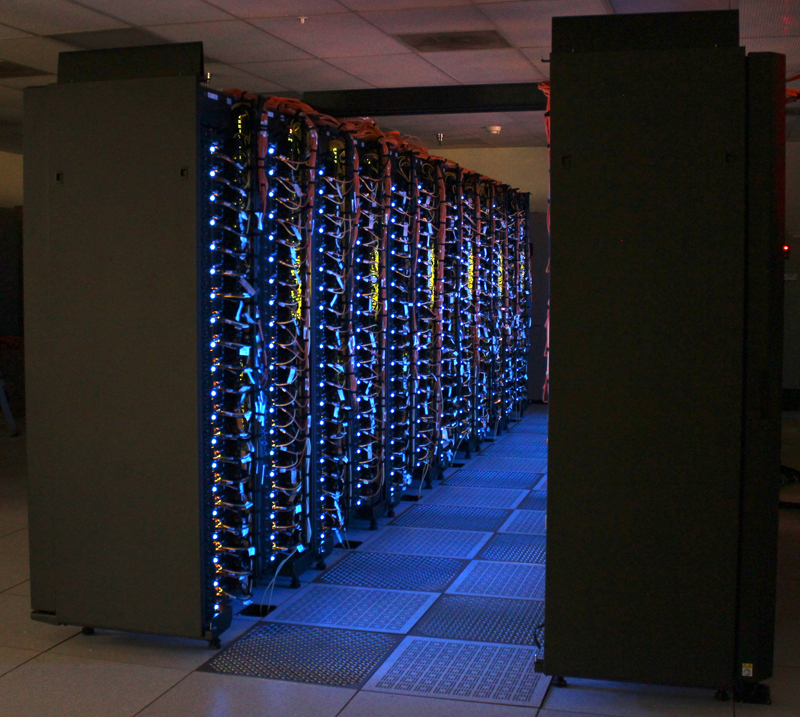
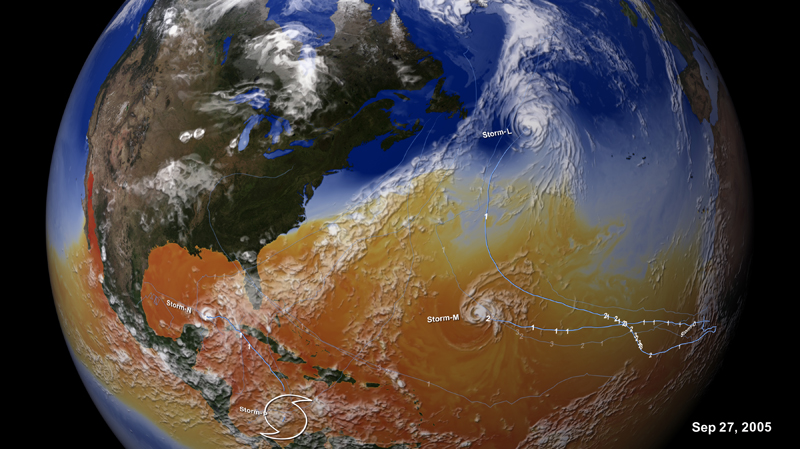
The NASA Center for Climate Simulation (NCCS) at NASA Goddard Space Flight Center (GSFC) supplies high-performance computing (HPC) and data services engineered to support climate simulations within NASA's Science Mission Directorate. Over the past few years, a number of technologies have emerged with the potential to change the landscape of HPC for climate simulations. NCCS and its user community have been exploring NVIDIA graphics processing units (GPUs), Intel Many Integrated Core (MIC) co-processors, cloud computing, and Virtualized InfiniBand, and have even begun to explore non-x86 processors such as the ARM and Atom.
Project Details
In October 2012, NCCS augmented its Discover supercomputer with Intel MIC co-processors integrated with Intel Sandy Bridge processors. The upgrade consisted of 480 IBM iDataPlex nodes configured initially with 240 Intel MIC processors but with enough capacity to integrate more MIC co-processors in the future. In addition, NCCS has been exploring the use of cloud technologies, Virtualized InfiniBand, and Hadoop Map/Reduce to support climate simulations and analysis within Discover. Finally, the exploration of non-x86 processors for potential use within climate simulations is in the very beginning stages.
Results and Impact
Making sense of these new technologies and how to deploy them efficiently and effectively is not an easy challenge. Specifically, we report on the following work:
- We created a small virtual cluster (eight nodes of Discover) to run benchmarks and test out the overhead of running HPC jobs within a virtual environment; initial measurements show excellent node-to-node bandwidth and promising benchmark performance measurements
- We installed a 36-node cluster designed to run Hadoop jobs for large-scale data analysis on climate data and compared Hadoop to other methods such as SciDB
- The porting and tuning of climate models to accelerators has been a major effort, with a focus on comparing codes being developed and run on GPUs and MICs
Our exploration of these advanced computing technologies considers their overall impact and is driving recommendations for how they can be deployed operationally for climate simulations. Realizing the promise of new HPC technologies would allow NASA scientists to push the envelope of climate science far beyond what is currently being simulated.
Role of High-End Computing Resources
The applications being run on Discover contribute to the overall scientific knowledge of climate change. Coupled with a robust and growing data analysis capability, NCCS provides an environment in which large-scale climate models are executed, data is analyzed and visualized, and discoveries are made.
Daniel Q. Duffy, NASA Goddard Space Flight Centerdaniel.q.duffy@nasa.gov