Flight Readiness Simulations for Artemis
Overview
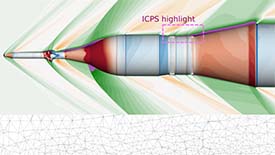
NASA’s Artemis program is sending astronauts, including the first woman and first person of color, back to the surface of the Moon for the first time in over 50 years. As part of this program, NASA Ames Research Center’s Space Launch System (SLS) Computational Fluid Dynamics (CFD) team are using high-performance computing resources to analyze and certify the aerodynamics of the SLS, which will lift the astronauts from Earth’s surface into orbit and beyond. The SLS is an adaptable launch vehicle with several different configurations planned, and the Ames SLS CFD team supports the development and certification of each version. Their current focus is on last-minute preparations for the Artemis I launch in late 2021 or early 2022, and on development of the more powerful Block 1B and Block 2 configurations.
Project Details
The availability of reliable supercomputing resources is a tremendous benefit because they can be used to troubleshoot issues and analyze features that might not otherwise be solvable prior to flight testing.
The Block 1 configuration, which is the name for the launch vehicle version used for Artemis I through III, has been under development since 2012. The Ames SLS CFD team has been a part of the process from the beginning, supporting initial conceptual design, critical design reviews, certification, and now pre-flight readiness analysis. Additionally, at least five other major configurations of SLS are in various stages of development, and the Ames SLS CFD team supports all of them. With the first flight of Artemis I fast approaching, the team’s highest priority is establishing the flight readiness of Block 1, which is similar to troubleshooting the vehicle’s design and performance, as well as all of the data used to certify it. While flight readiness analysis requires less computing resources than other phases of development, the work is critical to SLS and the Artemis program. The availability of reliable supercomputing resources is a tremendous benefit because they can be used to troubleshoot issues and analyze features that might not otherwise be solvable prior to flight testing.
Results and Impact
The flight readiness analysis helped the SLS Loads team verify that the Artemis I vehicle will be able to withstand the aerodynamic loads it will encounter during the first launch. The Ames SLS CFD team has performed several pre-launch troubleshooting analyses, which provide confidence to the many different teams working on Artemis that the vehicle is ready for flight. In addition to this flight readiness support, the Ames SLS CFD team continues to be a leader in CFD productivity, simultaneously developing complex aerodynamic databases for several configurations of the SLS vehicle.
Why HPC Matters
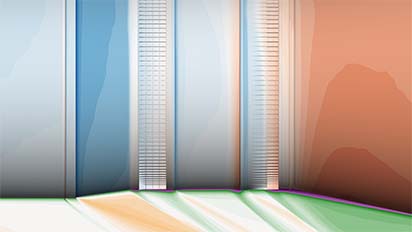
For any launch vehicle, especially one as large and complex as SLS, the time leading up to the first launch is a stressful period when many potential problems are identified. High-performance computers at the NASA Advanced Supercomputing (NAS) facility at Ames, have enabled the SLS program to troubleshoot and analyze many elements that would previously have gone unanswered or required testing of specific hardware.
What's Next
As the Artemis program continues to prepare for launches after Artemis I, with different missions flying different versions of the SLS vehicle, the Ames SLS CFD team will continue to provide support analyses. The team is currently working on flight readiness analysis for Artemis II—the first launch of the program with astronauts on board, design certification for Artemis IV (using the more powerful Block 1B configuration with the Exploration Upper Stage), and initial design work for Artemis IX, which will include newer, more powerful solid rocket boosters.
More Information
- NASA, Supercomputing, and the Artemis Moon Mission
- NASA’s Artemis Program
- Launch Vehicle Analysis at the NASA Advanced Supercomputing Division
Researchers
- Derek Dalle, NASA Ames Research Center Please enable Javascript to see email address.
- Stuart Rogers, NASA Ames Research Center Please enable Javascript to see email address.
- Guy Schauerhamer, Science & Technology Corp. Please enable Javascript to see email address.
- Jamie Meeroff, NASA Ames Research Center Please enable Javascript to see email address.