
How Will Exascale Data Change High-Performance Computing?
Overview
Traditional high-performance computing (HPC) solutions are built to optimize large-scale simulations. At the NASA Center for Climate Simulation (NCCS), it is becoming increasingly common for these simulations to generate petabytes (PB) of data. Scientists are also attempting to combine observations and model outputs in new ways. Since the datasets are so large and difficult to move, scientists typically employ the same HPC system that created the data to analyze that data, or they download subsets of data to their desktop environment. Neither of these solutions is optimized for such data access patterns and applications, leading to unbalanced usage of resources and extremely frustrated researchers.
Project Details

Future exascale environments will bring together technologies that are optimized for both HPC and analytics on the same system. Exascale applications are expected to create exabytes (EB) of data. This situation will require analytics to be performed across all subsystems of the environment. Given the amount of power required to move data, future HPC environments must have the capability to perform in-situ analytics to minimize data movement. Until the HPC industry develops exascale environments, the NCCS is evolving its architecture toward this end state.
Results and Impact
The NCCS is exploring hardware and software solutions from traditional HPC and emerging big data technologies, including:
- Advanced Data Analytics Platform (ADAPT) – Combines HPC and virtualization technologies to create a private cloud specifically designed for large-scale data analytics.
- Intel Head in the Clouds Project – Provides scientists with the ability to burst into commercial clouds as needed.
- Spatiotemporal Indexing – Provides a high-level spatiotemporal indexing that uses the knowledge of the structure climate data file stored in Hadoop to dramatically speed up MapReduce jobs.
- Hadoop and Posix – Couples Hadoop and Posix file systems through the use of IBM's Global Parallel File System (GPFS) to enable traditional and emerging analytics on the same data.
Why HPC Matters
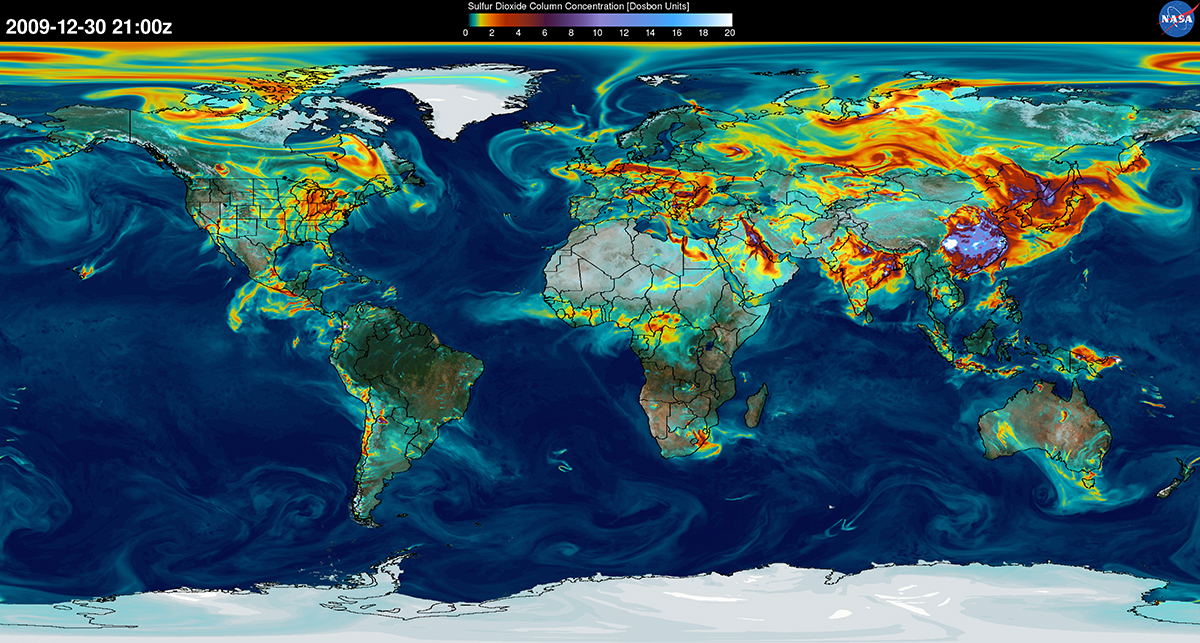
The Discover supercomputer (~80,000 processor cores with 33 PB of storage) is the primary compute capability within the NCCS and supports extremely high-resolution global climate model simulations and other projects. ADAPT is much smaller, containing only about 1,000 compute cores with approximately 5 PB of storage; it maintains a much higher storage-to-compute ratio than Discover. NASA scientists are using these systems to study our rapidly changing climate by tracking changes in surface water, vegetation, and biomass over different areas of the Earth.
What's Next
The NCCS is building an infrastructure capable of employing these technologies in daily operations to bridge the gap between current petascale and future exascale environments. This infrastructure will combine storage and compute to enable Posix access to the data and the next generation of in-situ, storage-proximal analytics required for EB of data.
Daniel Duffy, NASA Goddard Space Flight Centerdaniel.q.duffy@nasa.gov