Demonstrations
At SC19, researchers, engineers, and computer scientists from 4 NASA locations and several universities will present their findings over the past year. Details from 38 presentations—covering next-generation aviation, climate research, space exploration, cosmic origins, and much more—are featured below, along with spectacular images and videos.
A
Jordan B. Angel
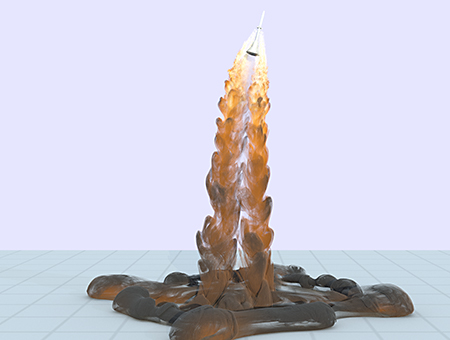
Towards Multiphysics Prediction Capability for the KSC Launch Environment B Michael Barad
Predicting Quadcopter Drone Noise Using the Lattice Boltzmann Method Connor Bice
Exploring the Origins of Extreme Magnetism in Red Dwarf Stars C Francois Cadieux
Predicting Orion Pad Abort Vibrations to Keep Artemis Astronauts Safe Ronald Caplan
Teaching Your Legacy Code New (GPU) Tricks Laura Carriere
Facilitating Science Through Centralized Storage Mark Carroll
Accelerating Science with AI and Machine Learning D Chuanfei Dong
How Does Space Weather Affect Mercury, Earth, and Uranus? Jared Duensing
Using CFD to Develop NASA’s X-57 Maxwell Flight Simulator F Thomas Fauchez
Simulating Rocky Exoplanet Atmospheres with General Circulation Models Adrianna Foster
Fine-Scale Forest Modeling Across the North American Boreal Zone H Christopher Hill
Realistic Simulations of the Coupled Atmosphere-Ocean-Ice System Robert Hood
Jumping the Queue: From NASA to the Commercial Cloud J Michael Jeffries
Simulating Dream Chaser® Spacecraft Aerodynamics: Subsonic through Hypersonic K Melinda Kahre
Simulating the Water Cycle and Cloud Formation on Mars Mehdi Khorrami
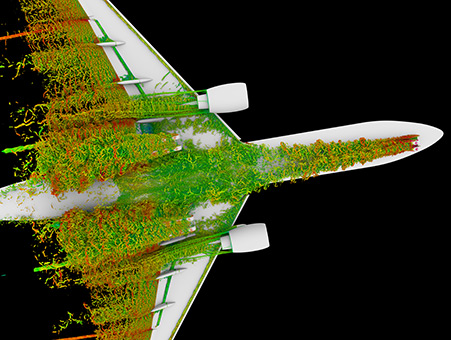
Airframe Noise Prediction Grand Challenge: Simulating a Large Airliner Landing Irina Kitiashvili
Modeling the Solar Corona to Study Sources of Space Weather Disturbances L Tsengdar Lee
Exploring Bespoke Supercomputer Options for Weather and Climate Workloads M Salvatore Mandra
Achieving Quantum Supremacy with Noisy Intermediate-Scale Quantum Devices Loren Matilsky
Discovering Distinct Cycles in the Global Solar Dynamo Jamie Meeroff
Building Booster Separation Aerodynamic Databases for Artemis II Paul Morin
HPC and the Topography of the Earth’s Surface N Marian Nemec
Minimizing Sonic Boom through Simulation-Based Design: The X-59 Airplane O Reid Ormseth
High-Performance Computing in the Azure Cloud P Molly Peeples
Simulating the Diffuse Gas Surrounding Galaxies Bruce Pfaff
What Could Possibly Go Wrong? – The Myth of the Smooth Install William Putman
The Future of Global Numerical Weather Prediction with GEOS R Mark Richardson
Numerically Modeling the Weather and Climate of Mars Nettie Roozeboom
Revolutionizing Assessment of Unsteady Flows Using Pressure-Sensitive Paint S Elliot Sherman
Simulating Air Quality and Volcanic Plumes with GEOS CCM Shayna Skolnik
Virtual World, Real Understanding: Using Virtual Reality to Visualize Earth Data Bob Sorensen
Exploring Bespoke Supercomputer Options for Weather and Climate Workloads Gerrit Stich
Predicting Jet Noise for Full-Scale Low-Boom Aircraft T Yihao Tang
HPC Framework for Predicting High-Altitude Relight in Aircraft Engines William Thigpen
The Evolution of NASA’s High-End Computing Capabilities John Thornton
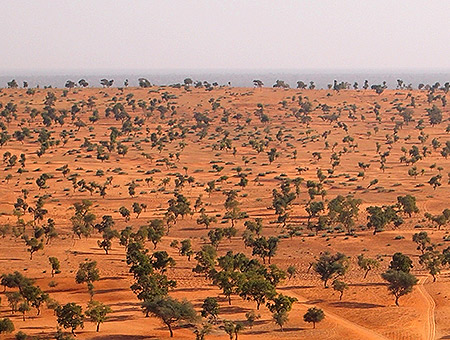
Microscale Analysis of Spacecraft Heat Shields Compton Tucker
Tree Census from Space: Quantifying Woody Biomass Using Machine Learning V Jordan Van Nest
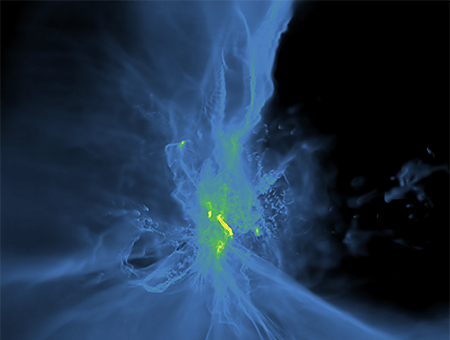
The Milky Way and Its Neighbors: Simulating Ultra-Faint Dwarf Galaxies Patricia Ventura Diaz
Towards Urban Air Mobility: NASA’s Quadcopter Air Taxi Concept