
Facilitating Science Through Centralized Storage
Overview
Imagine having access to interrelated NASA data from the cryosphere, atmosphere, hydrosphere, and geosphere all stored in the same place. Imagine being able to run your climate analysis on model output from the Global Modeling and Assimilation Office (GMAO) GEOS code or on exoplanet atmosphere output from the Goddard Institute for Space Studies (GISS). Imagine being able to do Machine Learning on the latest GMAO Nature Run output or six different reanalyses. The NASA Center for Climate Simulation (NCCS) Centralized Storage System (CSS) provides the means to do all of these things: a location for curated NASA data products to be shared among researchers and NCCS compute environments, including Discover, our traditional high-performance computing (HPC) environment; on-premise Cloud; Data Services; and, in the near future, Machine and Deep Learning compute.
Project Details
The NCCS provides 50 petabytes (PB) of online storage to Discover, 95 PB of tape storage, and 3.5 PB of online storage to Cloud. CSS provides an additional 17 PB of shared storage for curated data, with another 17 PB coming online in the new year. The NCCS uses IBM’s Spectrum Scale General Parallel File System (GPFS) to store the data. High-speed internal InfiniBand and 40 Gigabit Ethernet networks connect CSS to the compute and Data Services environments. Data must be covered by a Data Management Plan, have an identified curator, and be archived at a separate facility. It is then made available read-only to all our environments.
Results and Impact
Access to datasets such as Landsat, MODIS, GMAO forecast products, National Geospatial-Intelligence Agency (NGA) high-resolution imagery, ICESat-2, and reanalyses allows researchers to focus on science rather than data transfer, storage, and management. In addition, scientists can apply new techniques such as Machine and Deep Learning on these massive data holdings.
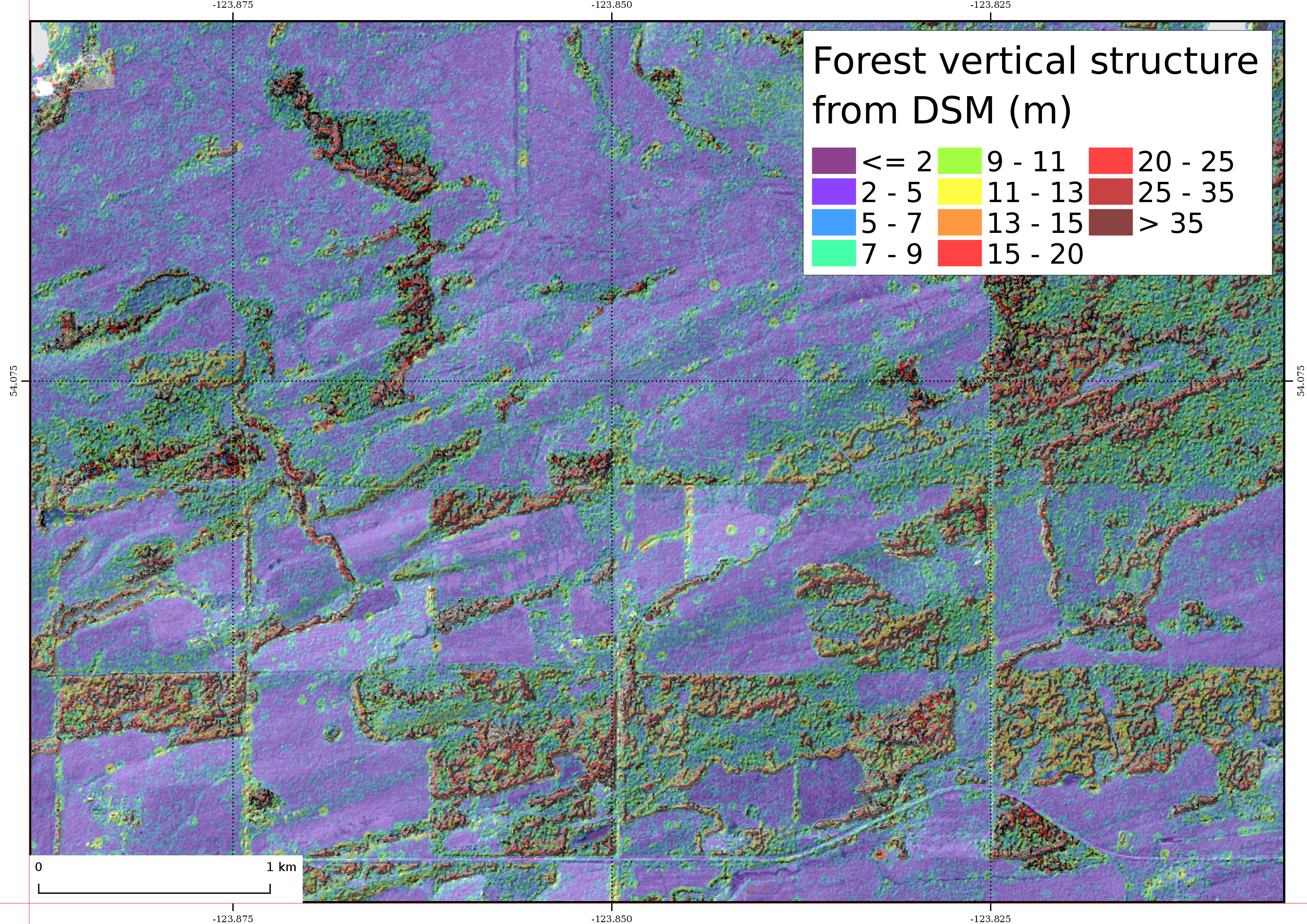
Research collaborations such as NASA’s Arctic Boreal Vulnerability Experiment (ABoVE) use large volumes of Earth observations, including high-resolution visible-wavelength imagery, on Discover to create digital elevation models (DEMs) and store them in CSS. This data is mounted on virtual hosts in the ADAPT Science Cloud for investigations using customized analytics environments to examine how the Arctic boreal environment (e.g., permafrost) is changing. High-resolution ABoVE analysis data generated on ADAPT can in turn be used on Discover, for example, in investigating high-mountain snowmelt and ice sheet-ocean interactions.
The Head in the Clouds workflow—a unique NASA effort to count trees and shrubs in sub-Saharan Africa conducted on both Discover and ADAPT—has been greatly simplified with the availability of the NGA data in both environments.
Why HPC Matters
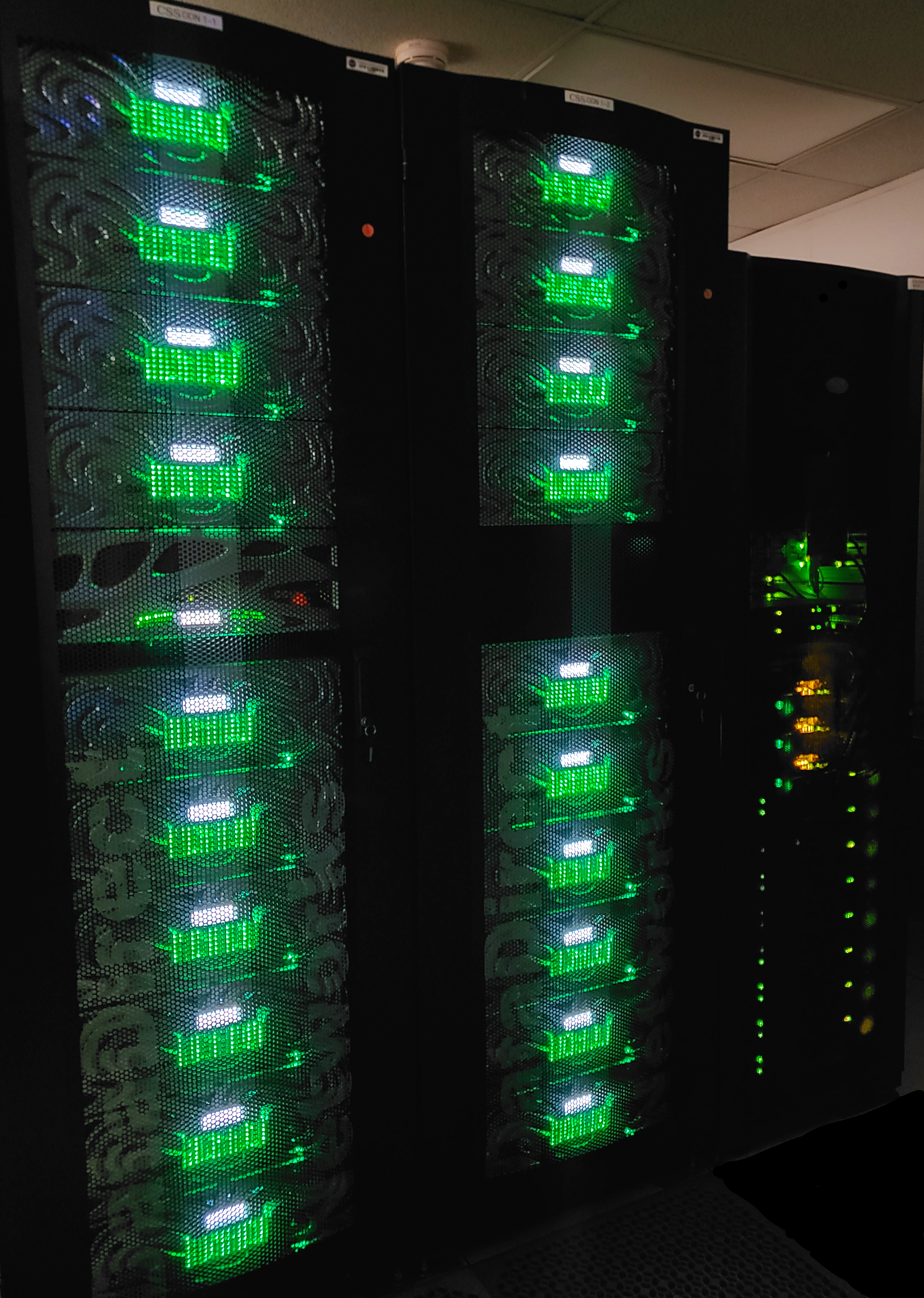
HPC provides the compute resources to process, analyze, and visualize these large datasets. Access to tens of petabytes of complementary Earth observations and analysis data—coupled with Discover’s powerful 6.7-petaflop HPC environment, ADAPT’s hundreds of customizable virtualized hosts, and GPUs for Machine Learning—is proving valuable to the NASA science community. This proximity of related data, processing, and services provides a unique opportunity to take advantage of interdisciplinary datasets and new research paradigms (e.g., Earth scientists studying cryospheric processes, the carbon cycle, and biomass).
What's Next
NCCS will increase available storage to 34 PB, add an 80-node GPU cluster to enable more Machine and Deep Learning opportunities, and provide search and discovery functionality as well as usage metrics to inform data sharing and eventual disposition.
More Information
- See the poster for this demonstration (PDF, 860KB). As shown in the NASA booth at SC19.
- Download the demonstration slide deck (PPSX, 36MB) as presented in the NASA booth at SC19. Click "Read Only" after launching presentation.
laura.carriere@nasa.gov Bennett Samowich, NASA Goddard Space Flight Center
bennett.r.samowich@nasa.gov