
The Evolution of NASA’s High-End Computing Capabilities
Overview
For over 35 years, the NASA Advanced Supercomputing (NAS) Division at NASA’s Ames Research Center has housed and managed the U.S. space agency’s most powerful supercomputing assets. Focused on high-end computing (HPC) technologies, efficient operations, and user success, the NAS Division has worked with industry to deploy a series of highly successful systems that have enabled scientific and engineering achievements across the agency.
The complementary role of the High-End Computing Capability (HECC) project is evolving to meet NASA’s future challenges in returning to the Moon as a pathway to Mars, while continuing exciting research in aeronautics, space exploration, and Earth science.
Project Details
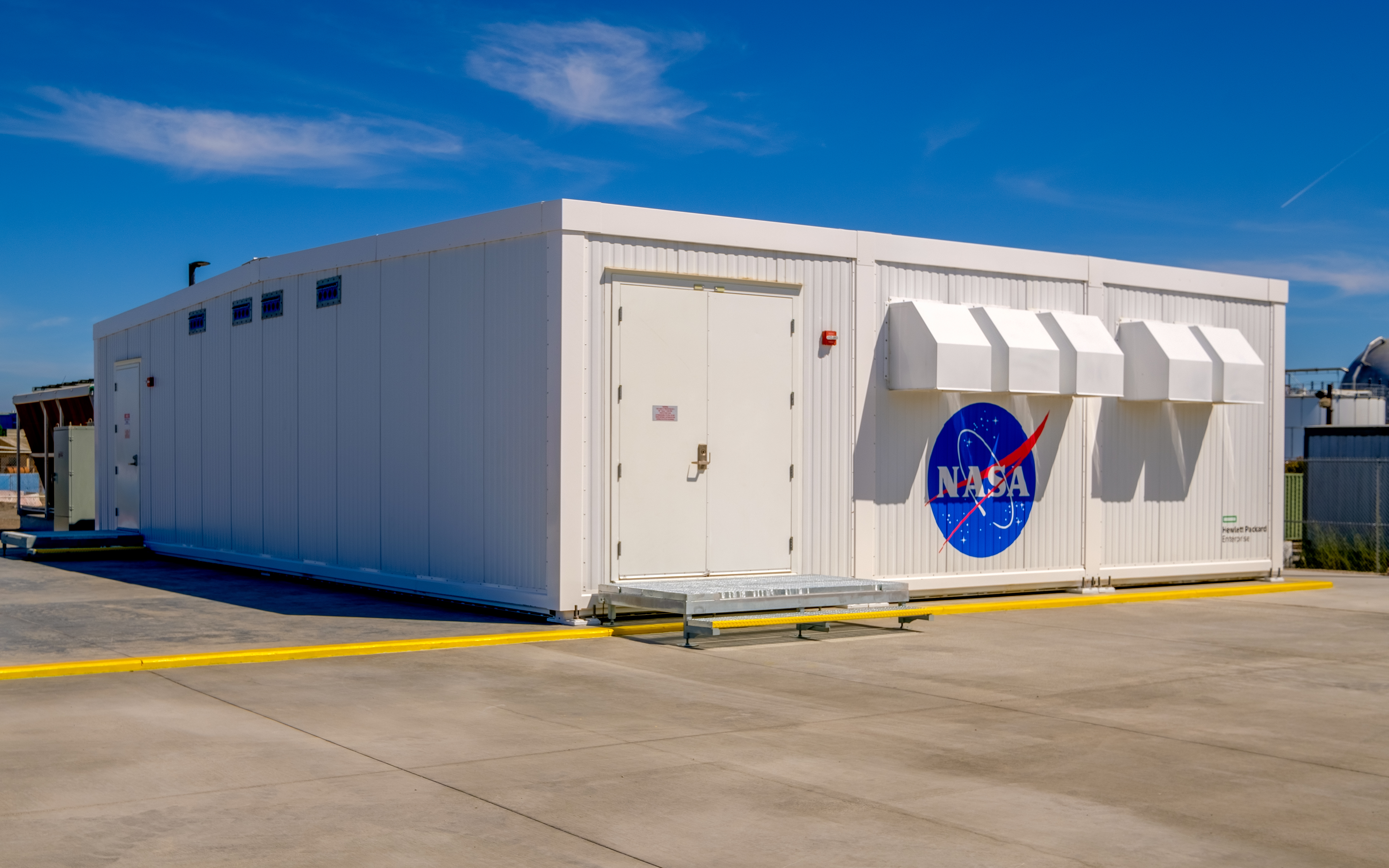
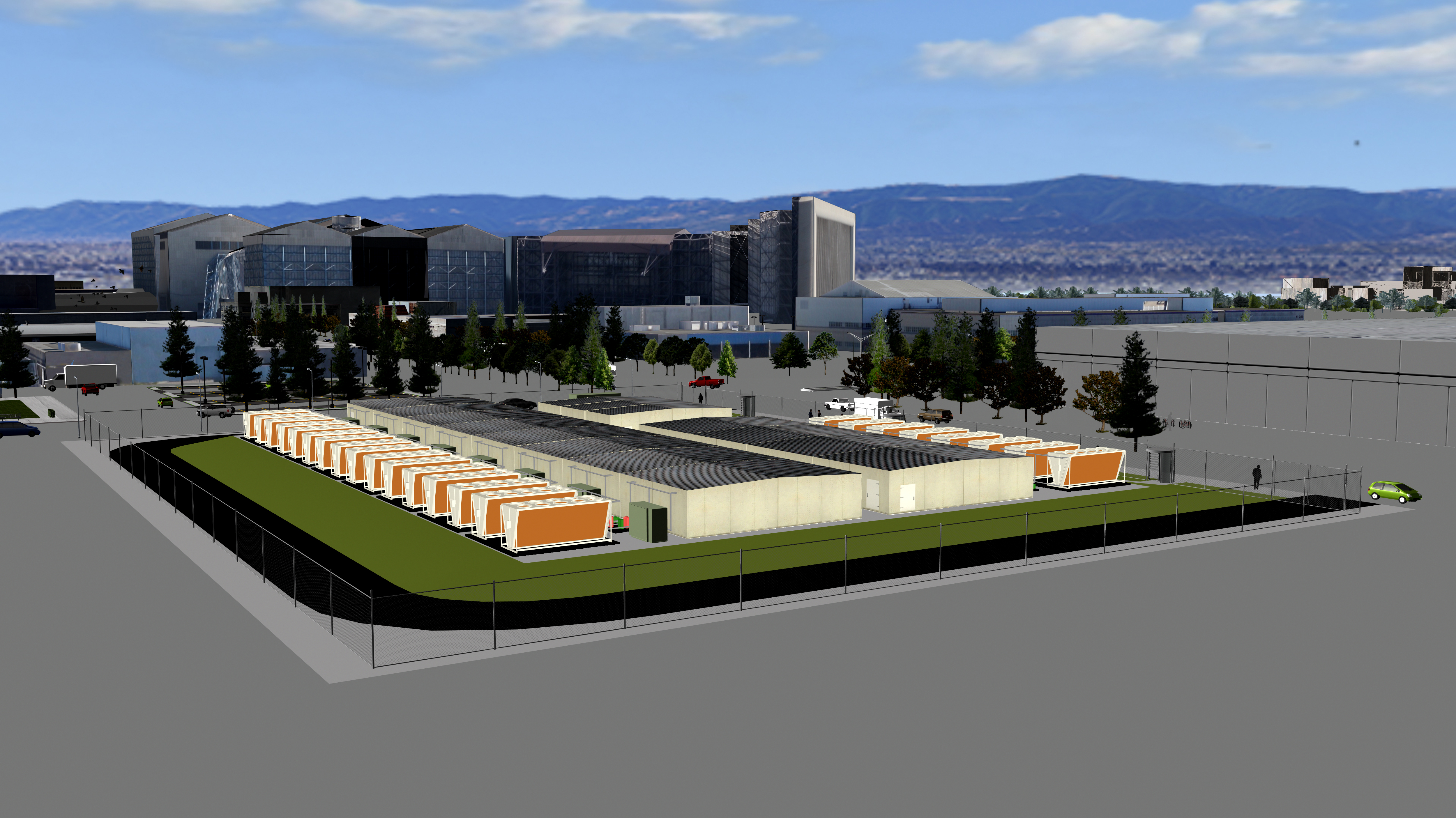
In Fiscal Year 2019, HECC established NASA’s newest Modular Supercomputing Facility (MSF), which houses an initial modular system named Aitken. This facility is the successful culmination of work accomplished over the past three years, through initial deployment of a prototype modular system and the subsequent construction of support infrastructure on a one-acre site that connects the system to the main NAS facility. Taking advantage of the temperate climate of the San Francisco Bay Area, the new facility utilizes outside air to cool NASA’s next-generation supercomputers.
Results and Impact
With the commissioning of this site, the NAS facility can potentially support 12 compute modules that will allow HECC to run more large jobs to help meet the agency’s ever-increasing demand for supercomputing resources. Aitken is an HPE system with 1,152 nodes; if fully populated with similar nodes, the MSF would have over 40,000 nodes and 1.6 million cores in 12 interconnected modules.
In Fiscal Year 2019, the modular approach saved approximately 2 million kilowatt-hours of power and over 3 million gallons of water, when compared to what would be used if the hardware had been installed in the primary NAS facility. The module’s power usage effectiveness (PUE) rating is an impressive 1.05—the same PUE as the prototype system—which far surpasses industry standards. The technology facilitates an operational approach to new system deployments that are not constrained by facility limitations; each expansion will be housed in a module that is customized to best support the systems deployed. The MSF will be able to provide up to 30 megawatts of power for future expansion.
Why HPC Matters
This evolving technology allows NASA to continue providing essential HPC resources to accelerate and enhance the agency’s work in space exploration, scientific discovery, and aeronautics research by continually creating and ensuring optimal use of one of the most productive HPC environments in the world.
What's Next
In the next year, the HECC project will concentrate on working with current and potential users across NASA to identify a comprehensive set of requirements necessary to achieve the agency’s science and engineering goals. This will be used to design NASA’s HPC roadmap and identify capabilities that will facilitate the successful transition to emerging technologies. The project will then identify risks that could impede these advances and work with industry to determine if the risks will be mitigated by planned technology development. When risk areas are not mitigated, HECC will partner with other NASA projects and programs, other national and international agencies, industry, and academia to conduct promising research that could lead to solutions for such risk areas.
More Information
- New Modular Facility Opens at NASA’s Ames Research Center
- High-End Computing Capability Environment
- See the poster for this demonstration (PDF, 630KB). As shown in the NASA booth at SC19.
- Download the demonstration slide deck (PPSX, 130.7MB) as presented in the NASA booth at SC19. Click "Read Only" after launching presentation.
william.w.thigpen@nasa.gov