
The Milky Way and Its Neighbors: Simulating Ultra-Faint Dwarf Galaxies
Overview
Recent surveys made with observatories such as NASA’s Hubble Space Telescope have greatly increased our knowledge of nearby dwarf and ultra-faint dwarf (UFD) galaxies. However, many uncertainties remain—including galaxy star formation histories, chemical compositions, kinematics, and distributions around the Milky Way. Modern cosmological hydrodynamic simulations have not been able to probe UFDs in the distant field, and because our best observational samples are near the Milky Way, the ability to interpret current and future observations requires Milky Way simulations that are capable of resolving down to the UFD range.
Project Details
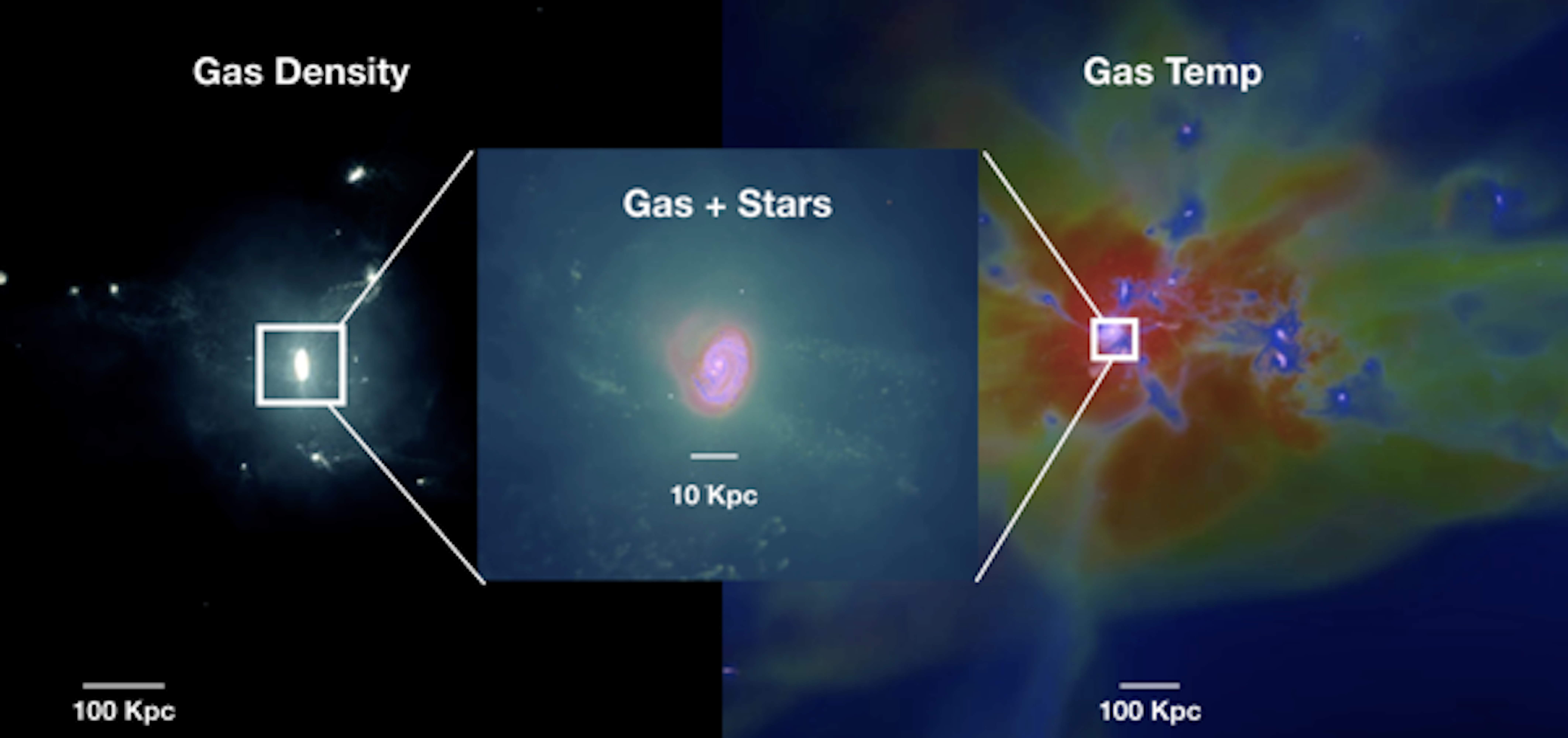
To meet this challenge, we developed our “DC Justice League” suite of Milky Way cosmological zoom-in simulations, which we leverage to study the small galaxies neighboring these Milky Way analogs and make predictions for future surveys by space observatories now in development, such as NASA’s Wide Field Infrared Survey Telescope (WFIRST) and James Webb Space Telescope (JWST). The DC Justice League simulations were produced using the fully cosmological, hydrodynamic code ChaNGa (Charm N-body GrAvity solver), massively parallelized to take advantage of HPC resources using a novel Charm++ scheme. ChaNGa contains the physics to model supernova feedback, star formation, and gas outflows in order to create realistic simulated galaxies easily comparable to observations from modern telescopes.
Results and Impact
The DC Justice League is the first suite of cosmological simulations capable of resolving down to the ultra-faint regime. The simulated dwarf and UFD galaxies reproduce a variety of observations across many orders of magnitude in luminosity, with a wide range of shapes, star formation histories, and gas contents. This large sample of simulated dwarfs and UFDs around the Milky Way will provide an ideal tool for analyzing and understanding upcoming observations by WFIRST, JWST, and other telescopes.
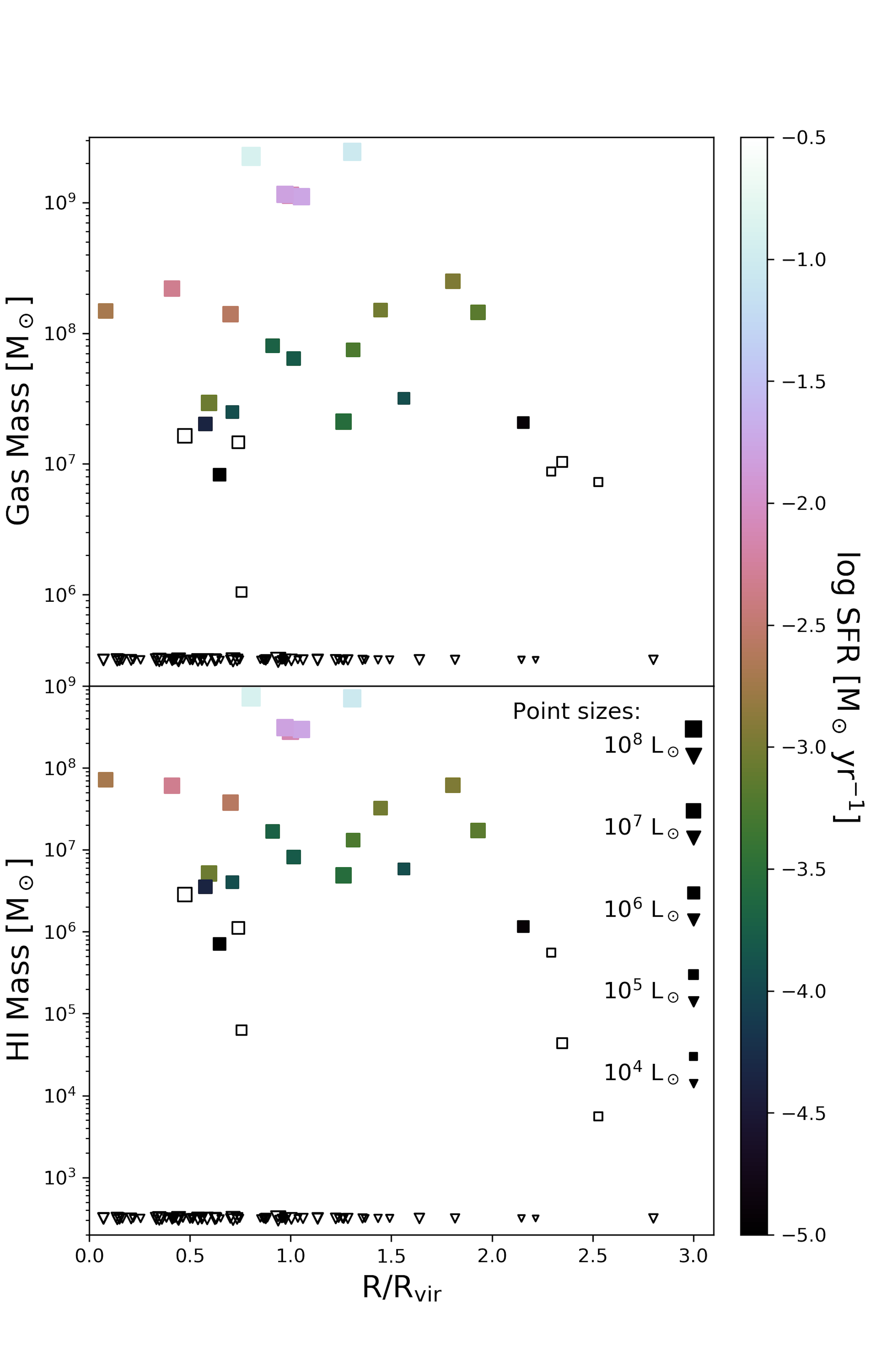
In one notable result, our simulations showed several UFD and faint dwarf galaxies that have appreciable gas mass, despite not being star-forming. This prediction comes as a surprise to observers hunting for these objects.
Why HPC Matters
We used the significant HPC resources at the NASA Advanced Supercomputing (NAS) facility in order to produce the DC Justice League simulations. This year alone, our flagship “Sandra” simulation of the Milky Way used 1.4 million node hours (28 million processor hours) on the Pleiades supercomputer, each job running on 400 Ivy Bridge nodes. Terabytes of data output from our simulations are being stored on the NAS facility’s mass storage system. Without these HPC resources, it would not be possible to achieve our groundbreaking simulations.
More Information
- N-body shop (ChanNGa code)
- See the poster for this demonstration (PDF, 520KB). As shown in the NASA booth at SC19.
jdvannest@ou.edu Ferah Munshi, University of Oklahoma
fdm@ou.edu